



















- The Thanksgiving and Homecoming Community Forum in Itibo transformed a personal celebration into a collective platform for cultural preservation, social justice, and community empowerment, reaffirming that true honour is fulfilled through service to others.
- By bringing together elders, professionals, youth, and institutions, the forum demonstrated that sustainable development for the Gusii people lies in the integration of indigenous knowledge, education, environmental stewardship, and inclusive justice.
- Dr. Kennedy Momanyi Bosire’s homecoming stood as a powerful reminder that lasting leadership is rooted in identity, shared responsibility, and the deliberate nurturing of community potential across generations.
On the morning of December 18, 2025, the grounds of Itibo PAG Primary School in Monyerero Ward stirred to life well before midday. Mist still clung to the Gusii hills as elders arrived in traditional attire, youth gathered in animated clusters, and families streamed in from neighboring villages. The low hum of conversation blended with the steady rhythm of the obokano, while the scent of roasting maize drifted across the school fields. This was not simply a homecoming; it was a deliberate collective pause, a thanksgiving transformed into a community empowerment forum.
Decades after first walking through these grounds as a pupil in the 1970s, Dr. Kennedy Momanyi Bosire (HSC, JKA – Mediator) returned as a son of the soil bearing national honor. On October 20, 2025, during Mashujaa Day celebrations in Kitui, he was recognized by President William Ruto and awarded the National Hero Award. Instead of a private celebration, Dr. Bosire dedicated his thanksgiving to the community that had shaped him, transforming the occasion into the Thanksgiving and Homecoming Community Empowerment Forum.
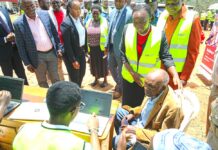
The Itibo gathering drew a remarkably diverse and representative audience, underscoring the collective stake in cultural renewal and community progress. In attendance were members of academia, farmers, youth, students and pupils, education administrators, opinion makers, local leaders, and special interest groups, spanning both the young and the old. Various Christian denominations were represented alongside traditional dancers, whose performances vividly illustrated the coexistence of faith and indigenous heritage. The presence of alumni, educators, and community stakeholders brought together over one thousand attendees, affirming a deep-rooted communal commitment to the preservation and advancement of the Gusii identity.

From Personal Honor to Collective Purpose
The gathering unfolded as a seamless blend of ceremony and civic engagement. Traditional regalia sat comfortably alongside academic robes while elders, professionals, youth, women leaders, and civil society representatives shared the same space. Gratitude, Dr. Bosire emphasized, must be accompanied by responsibility.
Central to the day’s discussions was Dr. Bosire’s life work, particularly the Comprehensive Ekegusii English Dictionary, Endabaro/Endabasia yEkegusii. The dictionary was presented as a cultural safeguard, a symbol of resistance against linguistic erosion, affirming that identity remains a cornerstone of community resilience. In a solemn rite, Dr. Bosire was formally installed as an elder by Mwanyagetinge Heritage Council, marking his role as a custodian of Gusii values and a bridge between ancestral wisdom and contemporary problem-solving.

Reflecting on language as the vessel of memory and morality, he warned that to lose one’s tongue is to lose the map guiding a people through conflict, growth, and coexistence.
Dr. Bosire reflected on his upbringing in Itibo, acknowledging the challenges of growing up with limited guidance while harboring big dreams. He emphasized that many young people today face similar struggles, feeling disoriented by an education system that often prioritizes examinations over character development and practical purpose.

He stressed the importance of equipping youth with not only knowledge but also practical skills, mentorship, and entrepreneurial opportunities. By combining education with values and real-world tools, communities can transform uncertainty into opportunity and empower the next generation to lead responsibly and innovatively.
“I grew up in Itibo, and I know what it feels like to have dreams but lack guidance,” Dr. Bosire said. “Our youth are full of potential, yet many are adrift in a system that values exams over character and theoretical knowledge over meaningful purpose. We must guide them with mentorship, equip them with practical skills, and instill values that enable them to transform uncertainty into opportunity, so they can lead with integrity, innovation, and service.”
At its core, the event was about advancing culture, education, and economic growth through collective responsibility. It embodied the spirit of empowering growth through culture and education and fostering cultural and economic development, emphasizing that language, heritage, and learning are inseparable from sustainable development. The gathering created a platform for reflection on how cultural consciousness can drive economic resilience, social cohesion, and educational excellence. By blending scholarly engagement, community participation, faith representation, and cultural performance, the Itibo forum stood as a living demonstration of culture as both identity and catalyst for development.

Education and Cultural Preservation: Prof. Emeritus Ratemo Michieka
The Chief Guest, Prof. Emeritus Ratemo Michieka, Chancellor of Tharaka University and President of the Kenya National Academy of Sciences (KNAS), brought the weight of academia and national leadership to the village level. He paid glowing tribute to Dr. Bosire’s scholarship, emphasizing that a nation without culture is a nation without a soul.
Prof. Michieka noted that the dictionary ensures that future generations do not become linguistic orphans and urged the youth to embrace it with the same pride. Dr. Bosire had shown in its creation.
Drawing from his extensive experience at the helm of the National Environment Management Authority (NEMA), he highlighted the interconnection between cultural heritage and environmental stewardship, asserting that protecting rivers, forests, and lands of the Gusii highlands is essential to honoring ancestors and ensuring sustainable development.

Culture and Indigenous Knowledge: Dr. Lilian Kemunto Matoke
The forum also delved into the critical intersection of nature, health, and traditional knowledge. Dr. Lydiah Kemunto Matoke, PhD (HSC), a renowned herbs specialist and Director of the Hope Natural Healthcare Centre, spoke passionately about the need to protect indigenous knowledge. She described the Gusii highlands as a “pharmacy of God,” warning that deforestation and neglect were eroding the medicinal plants that had sustained forefathers for generations. Her message was clear: safeguarding cultural heritage is inseparable from preserving health and well-being.
Health discussions during the forum were multifaceted. Dr. Matoke emphasized the importance of indigenous medicinal knowledge, while other speakers highlighted mental health challenges, substance abuse, and access to healthcare as critical issues. Participants explored practical strategies to improve health outcomes through traditional knowledge, modern medical practices, and community support systems.
Dr. Matoke is also the President, Herbalists Society of Kenya (HSK) and Africa Representative for
WHO – Traditional Complimentary Integrative Health.

Education, Social Values, and Mediation: Lilian Nyamasege
Education and social values were addressed by Dr. Lister Nyamasege, an educationist and trained mediator, who reflected on the widening gap between schooling and character formation. She argued that education must go beyond examination performance to nurture respect, responsibility, and communal values.
Dr. Nyamasege observed that many family and community conflicts arise from the erosion of cultural grounding rather than from material scarcity, underscoring the need for value based education.
Youth related concerns were woven into this discussion by Dr. Bosire, who drew on his own life journey to challenge young people to reclaim agency through skills development, entrepreneurship, and mentorship. He acknowledged the structural failures within the education system but urged youth not to surrender to despair.
His message was reinforced by community voices emphasizing financial literacy, innovation, and ethical leadership as tools for restoring purpose and dignity among young people facing unemployment and social pressure.
Legal Implications and Gender-Based Issues: Hon. Dr. Benard Omwansa
Legal and justice related discussions were led by Hon. Dr. Benard Omwansa, Senior Principal Magistrate at Kisii Law Courts and Deputy Registrar in-charge of Mediation, who provided a nuanced examination of the Gusii woman to woman marriage practice known as okweroba. He explained its original cultural intent as a mechanism for lineage preservation and social protection for childless women.
Dr. Omwansa emphasized that misunderstanding and misapplication of the practice have increasingly led to legal disputes, particularly around inheritance and land ownership.
“From the bench, we increasingly encounter disputes whose roots lie not in bad faith, but in the gradual loss of understanding of our own cultural systems,” Hon. Dr. Omwansa reflected. “Practices such as okweroba were anchored in responsibility, clarity of roles, and communal protection, yet today they are often invoked without that ethical framework, resulting in painful conflicts over land, inheritance, and family authority.
This is why the courts are actively supporting Alternative Dispute Resolution mechanisms that draw from indigenous values. Mediation allows families to speak, elders to guide, and justice to be pursued without destroying relationships. When culture and law work together through ADR, we do not merely resolve cases, we restore harmony and protect the dignity of those who are most vulnerable.”

These concerns were deepened by FIDA Kenya Client Services Manager (Kisumu Region) Lilian Jumba, who approached the issue from a human rights perspective. She highlighted the growing vulnerability of widows and children, citing cases where widows are evicted from family land by in laws following the death of a spouse. Jumba stressed that while culture is important, it must not be used to justify injustice or dispossession. She called for stronger community awareness and legal protection to ensure dignity and security for women and children.
Both speakers converged on the need for Alternative Dispute Resolution mechanisms rooted in indigenous values. They argued that culturally informed mediation offers a path to justice that preserves family harmony while preventing exploitation and prolonged litigation.

Environmental Stewardship: Eng. Joseph Terer
Eng. Joseph Terer, former Project Manager Nile Basin Initiative and Managing Director, Water Co. Bomet County, addressed the intersection of environmental health and modern lifestyles. He highlighted how pollution, deforestation, and misuse of chemicals contribute to rising incidences of disease, including respiratory ailments and cancers.
Eng. Terer emphasized that protecting the environment is not merely an ecological concern but a cultural and economic imperative. By maintaining healthy lands, water sources, and forests, communities sustain both their heritage and livelihoods.
These environmental concerns were complemented by Dr. Matoke’s reflections on indigenous medicine, which highlighted how ecological destruction directly undermines traditional health systems. Together, their contributions underscored the need to integrate indigenous environmental ethics with modern scientific approaches to achieve resilience and long term wellbeing.

Agriculture, Value Addition, and Youth Empowerment: Enid Charana
A pivotal moment of the forum came with Enid Charana, Managing Director of the Nyamira Rural Women Farmers Cooperative. Her address replaced the traditional discussion on youth and entrepreneurship, emphasizing practical, locally-driven pathways to economic empowerment. Charana shared her personal journey, explaining how she chose the soil over a conventional desk job after university. Her decision led to the formation of the cooperative, which now exemplifies value addition in agriculture.
“We observed that many people cultivate vegetables only to sell them cheaply at market centers,” she explained. “We decided to change the narrative. We don’t just sell vegetables; we process them. We don’t just grow bananas; we turn them into high-quality crisps, banana wine, and even manufacture ropes and handicrafts from the fibers.”
Charana spoke directly to young people struggling with substance abuse and idleness. She implored them to recognize that wealth and opportunity exist within the village but require creativity, diligence, and initiative. By engaging in value addition and cooperative ventures, the youth can transform not only their personal circumstances but also contribute to the broader development of the Gusii region. Her message was empowering, concrete, and deeply aligned with the forum’s theme of community upliftment.
Strengthening Community Cohesion and Conflict Resolution
Dr. Bosire’s role as a mediator and advocate for Alternative Dispute Resolution (ADR) framed much of the forum’s discussions on conflict. By training community members in mediation techniques grounded in Gusii traditions, he has created mechanisms for addressing disputes locally and constructively. This approach not only preserves cultural integrity but also reduces the burden on formal legal systems

ABOUT THE AUTHOR
From Village Boy to National Recognition
Dr. Kennedy Momanyi Bosire’s story mirrors the lived realities of many families in Gusii land. Born and raised in Isecha village in Monyerero Ward, Marani Sub County, he is the son of the late Mzee Zephaniah Bosire Nyandege, fondly known as Koniga, and Hebisiba Sarange, remembered as Obwanchani boria bw’akare. He grew up in a household of eleven children, shaped by communal values, resilience, and respect for elders.
His educational journey began at Itibo PAG Primary School, continued through Sengera and Irianyi, and culminated in his Kenya Certificate of Primary Education in 1977. From there, he joined Nakuru National and Technical School before pursuing Mechanical Engineering, graduating with a Higher Diploma and earning recognition as the best student of the year. His professional life unfolded at the Kenya Ports Authority, where he served from 1984 until 2022, rising through the ranks to become a Senior Engineer and ISO Auditor.
Yet even as his career advanced, Dr. Bosire remained deeply anchored in questions of identity, language, and cultural survival. Between 2001 and 2013, working alongside Abagusii elders and language experts, he undertook a monumental intellectual task: compiling the first Comprehensive Ekegusii English Dictionary, Endabaro /Endabasia y’Ekegusii. This journey took him across universities in the United States, where he honed skills in lexicography while serving as a language activist. The dictionary was launched across Kenya and internationally, including at the University of Texas at Arlington, marking a historic milestone for the Gusii people.
A Strategic Blueprint by the Itibo Primary BOM
In a pursuit to match the school’s historical prestige with the demands of modern education, the Itibo PAG Primary School Board of Management (BOM) has issued a comprehensive appeal to alumni and stakeholders to invest in a “Centre of Excellence.” Centered on the transition to the Competency-Based Curriculum (CBC), the BOM’s vision includes the urgent establishment of a Science and Innovation Laboratory and a Modern Library, ensuring that learners have the technological tools and digital resources necessary to compete globally.
Beyond the classroom, the Board is championing the holistic development of the “whole child” by seeking partnerships to create a PE Talent School and a Culture and Heritage Centre; these facilities are designed to safeguard local traditions while nurturing professional pathways in sports and the arts. Finally, to ensure no student is left behind, the BOM’s roadmap prioritizes the creation of a Learning Resource Centre and a Teachers’ Training Hub, a dual-purpose initiative aimed at providing remedial support for diverse learners and continuous pedagogical upskilling for the teaching staff.

Thanksgiving as a Collective Responsibility
Rather than mark these honours privately, Dr. Bosire made a deliberate choice. He returned home to Itibo to dedicate his thanksgiving to the very community that shaped him. The Thanksgiving and Community Empowerment Forum was therefore conceived not as ceremony, but as intervention. It was an intentional space to address pressing challenges facing local families, including poverty, youth unemployment, substance abuse, gender based violence, environmental degradation, and the erosion of indigenous knowledge.
From the outset, the gathering affirmed a central idea. Honour finds meaning only when it is shared. Gratitude becomes complete only when it empowers others.
Dr. Bosire, drawing from his own journey, challenged young people to reclaim agency through skills development, entrepreneurship, and mentorship. Youth empowerment speakers echoed this call, emphasizing financial literacy, innovation, and ethical leadership. The message was clear. The potential within the community remains vast, but it requires deliberate nurturing and supportive structures.
Community Empowerment and Collective Action
Community organization and grassroots action were reflected through references to initiatives such as the ABoGwa Community Group, which several speakers cited as evidence of what collective action can achieve. These examples illustrated how community based organizations can support education, promote savings and investment, and create sustainable livelihood opportunities.
Across these discussions, the forum emerged as a space not only for dialogue but for connection between community members, government representatives, civil society actors, and development partners. The emphasis was on shared responsibility, local ownership, and partnerships grounded in trust.
A defining highlight of the occasion was the strong presence of school alumni, whose participation symbolized continuity between generations and renewed responsibility toward their alma mater. Their engagement reinforced the central role of educational institutions in shaping leadership, values, and cultural stewardship. The impressive turnout of over one thousand participants not only reflected respect for Dr. Kennedy Momanyi Bosire’s cultural scholarship but also signaled a shared urgency to safeguard the Gusii soul. The gathering concluded with a collective call for unity among alumni, authorities, local leadership, Members of Parliament, County Government, the Ministry of Education, and well-wishers to translate cultural pride into tangible support for education and heritage preservation.

A Legacy Rooted in Service
The closing reflections returned to Dr. Kennedy Momanyi Bosire, whose personal journey symbolized the forum’s central message. Speakers described him as a custodian of collective memory and a bridge between tradition and modern scholarship. His recognition was framed not as an individual triumph but as a call to service and responsibility.
The forum affirmed that the future of the Gusii people depends on integrating culture, education, justice, environmental stewardship, and inclusive economic empowerment. Leadership, participants agreed, is most meaningful when it is rooted in service and shared across generations.
In Itibo, a renaissance took shape as a deliberate commitment to renew the Gusii soul with clarity, dignity, and purpose for the future.
PICTORIAL