



























- As an Augustinian who has ministered in Peru, the new Pope understands the complex relationship between center and periphery, between resource exploitation and justice.
- In this context, the African Church’s contribution must be seen not merely as numerical growth, but as spiritual depth, cultural richness, and practical theology.
- The world now watches to see if this new papacy will mark a turning point: a moment when the periphery is no longer peripheral, but central to the heart of the Universal Church.
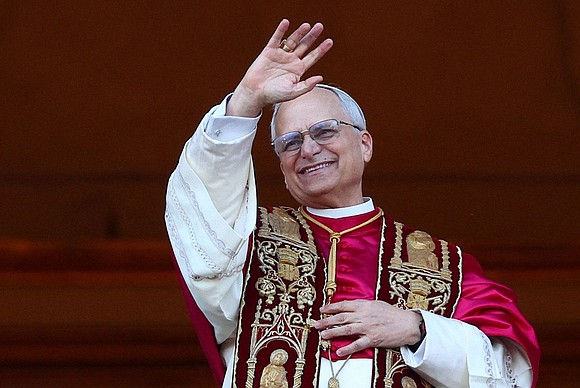
The panorama from Saint Peter’s Square on the day of the new Pope’s announcement offered a familiar tableau: a sea of faces, predominantly white. Yet this image belies a profound demographic reality within the Catholic Church. While the West grapples with aging congregations and declining attendance, Catholicism is experiencing vibrant and exponential growth in Africa. This stark contrast raises a vital question: Will the new pontiff fully embrace Africa’s dynamic church—not just in rhetoric, but through tangible action that dismantles long-standing marginalization?
The sparse presence of African faithful in Rome for this historic occasion speaks volumes. Their absence is not due to apathy, but rather to structural barriers: stringent visa regimes steeped in suspicion, and economic realities that prevent many from making such pilgrimages. Still, this physical absence should not translate to an absence in the consciousness of the Universal Church.
Africans—within and beyond the Catholic fold are too often treated as an afterthought. Our experiences, our theologies, our voices are relegated to the periphery. Just last Sunday, I felt this exclusion firsthand, as a family visibly avoided sitting near us in church. It was a painful reminder of the subtle but persistent “othering” that contradicts the essence of the Eucharist: the common bread we are all invited to break.
This marginalization is also reflected in the narratives that dominate Catholic discourse. Coverage from Saint Peter’s Square focused largely on white, European perspectives. In contrast, back in Africa, the conclave was met with fervent engagement. WhatsApp groups buzzed with novenas. When the white smoke rose, it triggered waves of celebratory messages and prayers. Images of the new Pope’s past visits to Kenya—in Karen with the Augustinian community, and among the people of Baba Ndogo—quickly made the rounds, revealing a deep, pre-existing connection to the African context.
His homily at the Karen church offered a glimmer of hope. Quoting the Responsorial Psalm—“Your words, O Lord, are spirit and life”—and calling for open hearts, he conveyed a universal message grounded in Christ. His emphasis on the Church as a welcoming, diverse community built on the rock of faith resonates deeply with the African Church, which has long lived and served from the margins.
As an Augustinian who has ministered in Peru, the new Pope understands the complex relationship between center and periphery, between resource exploitation and justice. His initial call for peace, and his concern for workers and farmers, signals awareness of the struggles that disproportionately affect the Global South. He takes the helm at a pivotal time, as the periphery demands recognition—not as a burden, but as a bearer of vitality.
In this context, the African Church’s contribution must be seen not merely as numerical growth, but as spiritual depth, cultural richness, and practical theology. The rise of Swahili Masses and community-led initiatives reflects a communitarian spirit rooted in African traditions. These traditions, when blended with Augustinian virtue ethics, offer a powerful foundation for faith-driven action in Africa.
Saint Augustine saw virtues as gifts from God—means to attain moral excellence and spiritual union with the divine. His four cardinal virtues—prudence, justice, temperance, and fortitude—alongside the theological virtues of faith, hope, and charity, remain deeply relevant today. In the African context, where corruption, poor governance, conflict, and human rights violations persist, these virtues offer a roadmap for moral leadership and social transformation.
Yet, for Africa’s contribution to be fully realized, the Church must move beyond foreign-imposed frameworks. It must recognize the dignity, resilience, and spiritual richness embedded in African lived experiences—our love, our families, our faith, our hope. The communitarian ethic that undergirds African life must be viewed not as exotic or “other,” but as an authentic expression of Catholic social thought.
The new Pope’s prior engagement with Africa is promising. But will he transcend the gravitational pull of Rome’s traditional power structures? Will he challenge the systemic and symbolic barriers that exclude African voices? The African Church—young, energetic, and grounded in community—is ready to be seen, heard, and embraced.
The world now watches to see if this new papacy will mark a turning point: a moment when the periphery is no longer peripheral, but central to the heart of the Universal Church.
The writer, Mary Njeri Kinyanjui, PhD, is an independent scholar based in the United States.