

























- The Senate oversight session exposed financial management gaps at Vihiga County Referral Hospital, including unexplained expenditure discrepancies, unregulated patient bill waivers, and weaknesses in procurement and human resource practices.
- Senators emphasized the urgent need for stronger financial controls, digital health systems, and adherence to public finance laws to prevent revenue leakages and improve accountability in county health facilities.
- Despite the audit concerns, Vihiga County leadership says reforms are underway as the hospital simultaneously undergoes evaluation for possible elevation to Level 5 status, signaling both institutional challenges and opportunities for growth.
Public hospitals across Kenya continue to face mounting pressure to balance service delivery with strict financial accountability. Recent deliberations at the Senate have once again brought these challenges into sharp focus, after audit queries raised concerns about financial management, procurement practices, and digital infrastructure at Vihiga County Referral Hospital. While the issues discussed relate to one facility, they mirror broader systemic questions about governance, transparency, and sustainability within county-managed health institutions in the era of devolved healthcare and the transition to the Social Health Authority (SHA).
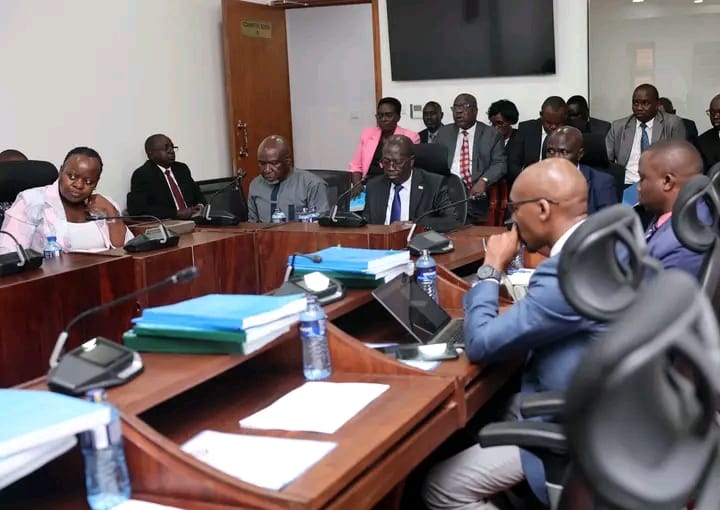
The Senate County Public Investments and Special Funds Committee recently convened an oversight session to examine the financial management of Vihiga County Referral Hospital following concerns raised in the Auditor General’s report for the 2024/2025 financial year. The meeting, chaired by Godfrey Osotsi, brought together county officials led by Wilber Ottichilo and members of the hospital’s management team to respond to a qualified audit opinion pointing to several financial and administrative inconsistencies.
At the center of the deliberations was a significant discrepancy in the hospital’s medical and clinical expenditure records. According to the financial statements submitted for the audit, medical and clinical costs were recorded at KSh49.3 million. However, supporting schedules presented during the audit review indicated a higher figure of approximately KSh71 million. The difference created an unreconciled gap of more than KSh21.6 million, which the hospital management was unable to explain conclusively during the session.
The Auditor General’s report also highlighted another challenge linked to the ongoing national transition to the Social Health Authority. The audit flagged KSh116 million in receivables that remained uncollected following the shift from the previous health insurance reimbursement framework. Such transitions, experts note, often create temporary financial gaps for hospitals as billing systems and payment flows adjust to new national policy frameworks.
During the meeting, Senator Osotsi also raised concerns about the hospital’s handling of patient bill waivers. Records presented to the committee showed that approximately KSh2.6 million had been waived for patients without clear documentation of the criteria used or evidence of formal approval from the county treasury.
The senator cautioned that while hospitals often provide compassionate waivers to vulnerable patients, such decisions must follow established public finance procedures.
“Governor, we cannot have a situation where millions in revenue are waived into thin air without a paper trail,” Senator Osotsi observed. “Waivers must be processed through a formal committee structure. When statutory requirements are bypassed, it creates opportunities for financial leakages.”
Committee members also scrutinized issues related to human resource management and procurement compliance. The audit found that the hospital had engaged 46 casual workers who had served for more than three years without regularization of their employment status, a situation that contravenes provisions of the Employment Act 2007.
In addition, the facility reportedly spent KSh5.4 million on emergency repairs for X-ray equipment and an uninterruptible power supply (UPS) system, expenditures that had not been captured in the hospital’s approved procurement plan.
Members of the committee noted that while emergency repairs in healthcare facilities are sometimes unavoidable, procurement rules still require transparent documentation and approval mechanisms to safeguard public funds.
Another area of concern involved the hospital’s digital management systems. Senator George Mbugua questioned why the Chek Health digital system had not been operational during the audit period. According to hospital management, missing hardware components had rendered the system non-functional, forcing staff to revert to manual billing and record-keeping processes.
The senator warned that reliance on manual systems exposes hospitals to higher risks of accounting errors, inefficiencies, and potential revenue losses.
“It is difficult to understand how a Level 4 hospital can operate with a manual bypass because hardware for a digital system is missing,” Senator Mbugua remarked. “Digital platforms are meant to provide real-time billing, accountability, and revenue tracking. Without end-to-end automation, it becomes difficult to ensure that every shilling collected through the Facility Improvement Fund is properly accounted for.”
Responding to the concerns, Governor Ottichilo acknowledged the audit findings and emphasized that the county government viewed them as an opportunity to strengthen institutional systems rather than merely respond to compliance questions.
He explained that some of the financial variances arise from complex reconciliation processes between hospital-level accounting records and the county treasury’s centralized financial management systems. The governor indicated that the county administration is working toward granting the hospital full status as an independent accounting unit, a move expected to improve transparency and operational efficiency.
“We are treating the audit findings as a corrective roadmap,” Governor Ottichilo told the committee. “Steps are already underway to regularize the employment status of long-serving casual workers through the County Public Service Board. We have also initiated the formation of a Waiver and Exemption Committee to ensure that such decisions follow clear and accountable procedures.”
He added that strengthening the hospital’s accounting systems would be a key priority as the facility prepares for expanded service delivery.
The Senate committee concluded the session by issuing several directives to the hospital’s management and the county government. Among them was the requirement to submit all missing documentation, including a comprehensive fixed asset register, before September. The committee also instructed the management to reconcile the KSh19.4 million variance identified in the hospital’s opening balance records.
The financial review comes at a time when Vihiga County Referral Hospital is undergoing broader institutional evaluation. Recently, a team from the Kenya Medical Practitioners and Dentists Council visited the facility to assess its readiness for possible elevation to Level 5 status, a classification reserved for hospitals with expanded clinical capacity, specialized services, and advanced training capabilities.
During the inspection, the delegation conducted a detailed review of key departments, service units, and infrastructure in line with standards set by the Ministry of Health Kenya and other regulatory frameworks.
Preliminary observations from the evaluation team acknowledged the progress made by the hospital and the Vihiga County Government in strengthening health services and expanding infrastructure. Officials noted that continued investment in governance systems, financial management, and digital health infrastructure would be critical in supporting the facility’s ambitions for higher-level status.
For observers of Kenya’s devolved health sector, the developments in Vihiga illustrate both the opportunities and the governance challenges facing county hospitals. As facilities expand services and manage increasingly complex funding streams, strong financial systems, transparent oversight, and digital integration will remain essential pillars for sustainable healthcare delivery.
YOU MAY ALSO LIKE: Vihiga County Leads in Accessible Healthcare With Strengthened Facilities and Landmark HPV Vaccine Launch
How SHA Claim Rejections Are Undermining Healthcare Financing in Kenya