


























- Syntropic agroforestry in Kenya represents a transformative shift from extractive farming to regenerative systems, restoring degraded land, strengthening food security, and redefining the relationship between communities and nature.
- Through the strategic partnership of BloomBells Charity, Tharaka University, and Forests4Farming, knowledge, research, and grassroots action are converging to empower students, farmers, and communities with sustainable, lifelong solutions.
- More than a project, this initiative is a generational movement, planting the seeds of resilience, dignity, and ecological balance for a future where both people and the planet can thrive together.
In the sun-scorched expanses of Tharaka Nithi County and the fertile yet increasingly fragile soils of Homa Bay County, a quiet but profound transformation is taking root. It is not a transformation driven by heavy machinery or chemical inputs, but by a philosophy that listens to the land, works with nature, and restores life from the ground up. This is the promise of syntropic agroforestry, an ecological farming approach now gaining momentum through a landmark partnership between BloomBells Charity, Tharaka University, and Forests4Farming.
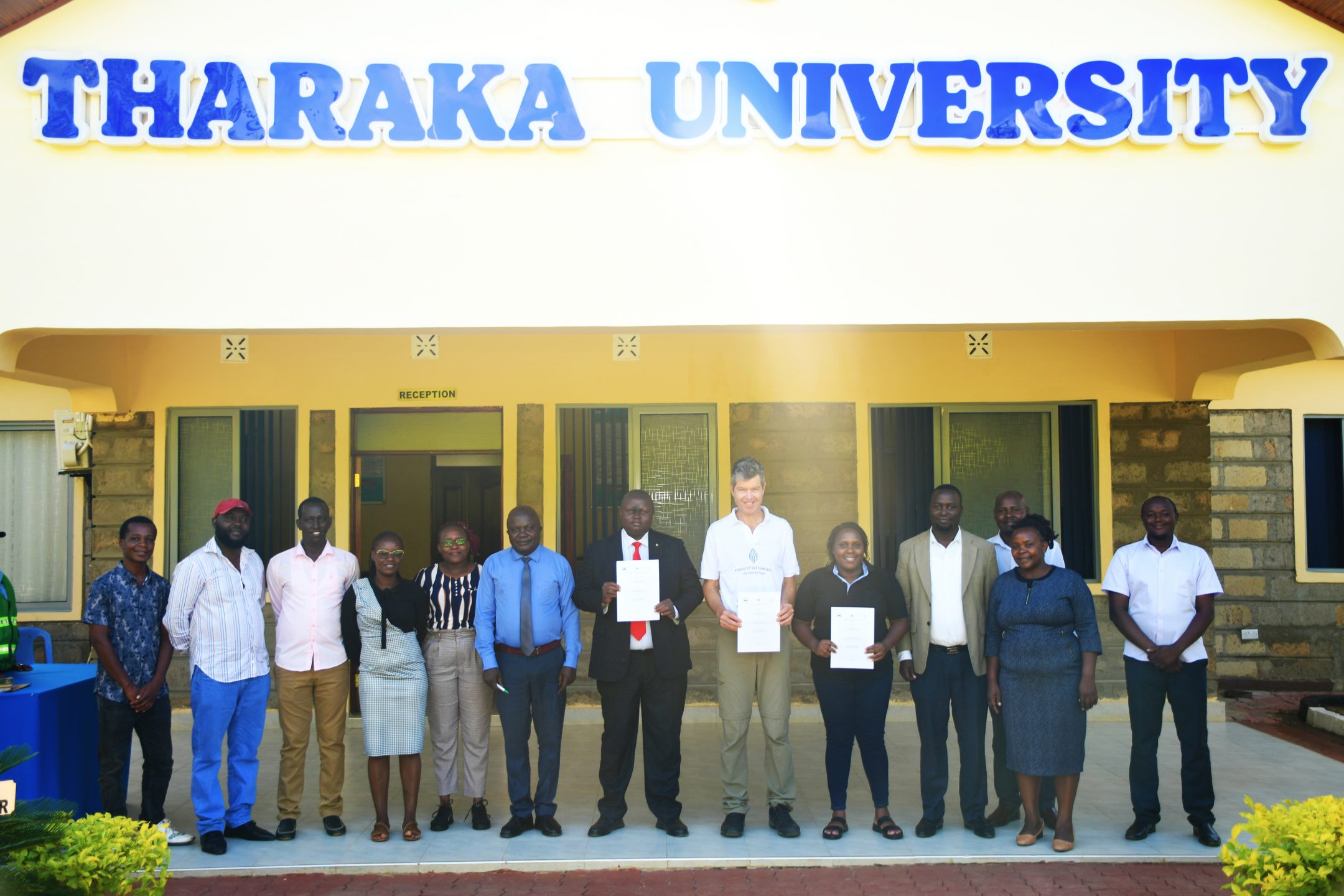
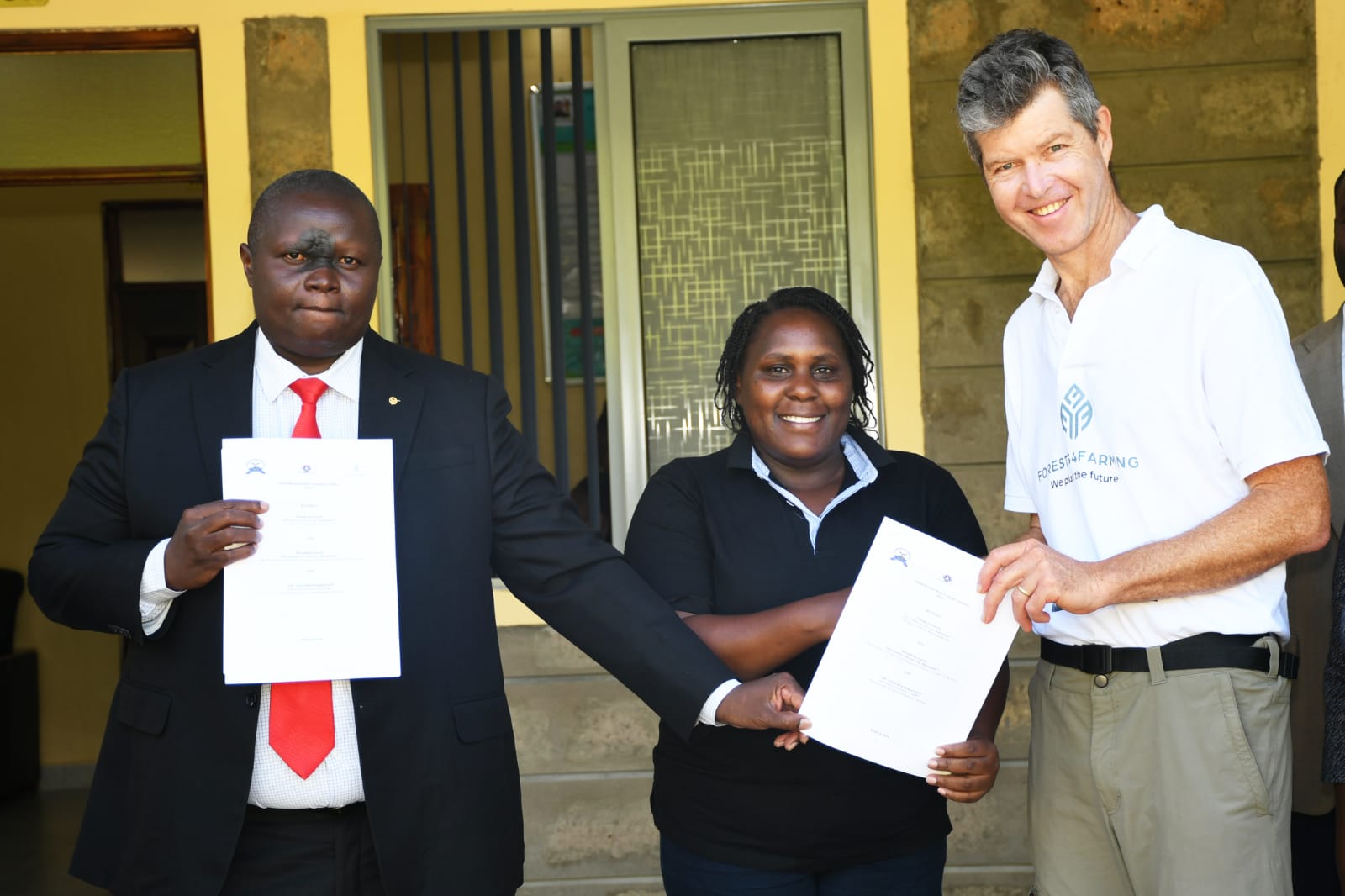
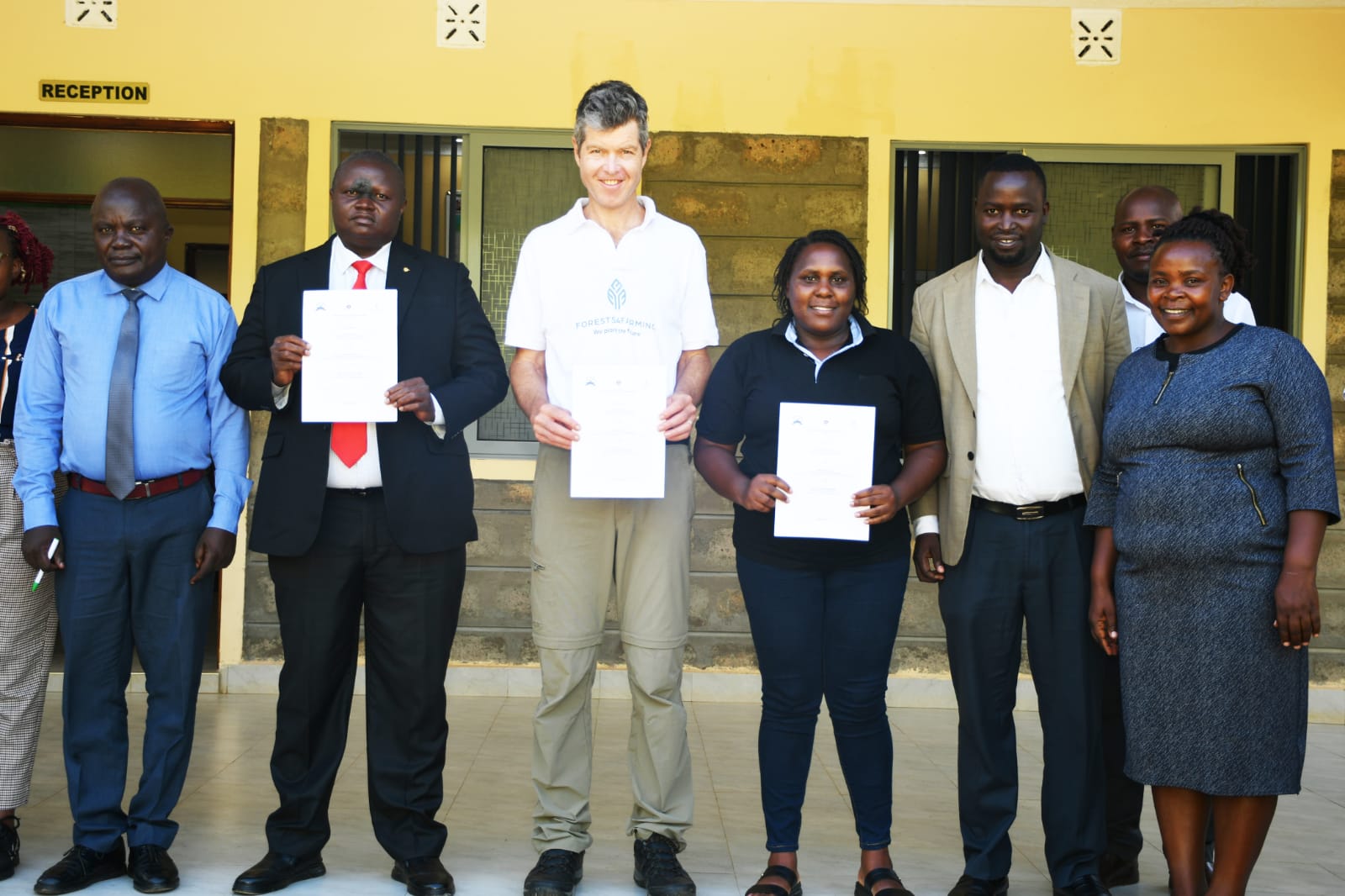
The recently formalized Memorandum of Understanding (MoU) among these institutions represents far more than a symbolic agreement. It is the foundation of a shared vision, one that seeks to regenerate degraded landscapes, strengthen food systems, empower communities, and redefine the relationship between people and the environment.
Where Knowledge Meets the Soil
The partnership came alive during a dynamic syntropic agroforestry demonstration held at Tharaka University. What began as a structured field exercise quickly evolved into a vibrant learning ecosystem, bringing together students, academic staff, development practitioners, and members of the surrounding community.
At the center of the demonstration was Hannes Thaler, Co-founder and Director of Forests4Farming, whose deep practical knowledge guided participants through the principles and practice of syntropic systems. With precision and patience, he demonstrated how land once considered exhausted could be reawakened through intentional design.
Participants worked side by side, marking planting lines, preparing beds, and arranging species in carefully planned layers. Bananas were planted as foundational crops, their broad leaves offering shade and moisture retention. Alongside them came a diversity of food and cash crops: maize, beans, cassava, sweet potatoes, vegetables, and fruit trees, each selected not only for yield but for its role within the larger ecological system.
Students and farmers alike learned that in syntropic agroforestry, every plant has a purpose. Some fix nitrogen, others provide biomass, others protect the soil, and others generate income. The result is not a monoculture, but a living, breathing system of mutual support.
Students at the Heart of Transformation
For the students of Tharaka University, the demonstration was more than a lesson; it was an awakening.
Drawn from disciplines such as agriculture, environmental science, and community development, students engaged directly in every stage of the process. They handled tools, planted crops, pruned existing vegetation, and observed the immediate effects of their interventions on the land.
In the classroom, they had studied theories of sustainability, climate change, and soil science. On the demonstration farm, these concepts became tangible. They witnessed how pruning stimulated growth, how ground cover reduced moisture loss, and how plant diversity enhanced resilience.
Many students expressed a renewed sense of purpose. They began to see themselves not just as learners, but as future practitioners and ambassadors of regenerative agriculture. The demonstration ignited discussions about research opportunities, innovation, and the role of youth in addressing Kenya’s pressing environmental challenges.
Lecturers and university staff were equally engaged. Moving beyond their traditional roles, they worked alongside students, modeling a collaborative approach to learning. Their participation reinforced the university’s commitment to experiential education, where knowledge is not confined to lecture halls but cultivated in real-world settings.
Community Learning: From Observation to Ownership
Equally significant was the active involvement of the local community. Farmers from neighboring areas attended the demonstration, bringing with them years of lived experience and a deep connection to the land.
For many, the concept of syntropic agroforestry was new. Yet, as they observed the process and participated in the planting, it began to resonate. They saw how bananas could be integrated with other crops to create microclimates, how organic matter could be returned to the soil through pruning, and how diversity could reduce the risks associated with unpredictable weather patterns.
The learning was practical and immediate. Farmers asked questions, shared insights, and reflected on how these methods could be adapted to their own farms. The demonstration site became a space of dialogue—where scientific knowledge met indigenous wisdom, and where innovation was shaped by local realities.
Bloombells Charity: Expanding the Scope of Impact
For BloomBells Charity, the initiative represents a natural and necessary evolution of its mission.
Ms Amina Nyaga, a director at the organization, captured this shift with clarity. For years, BloomBells has worked tirelessly to address period poverty, ensuring that girls remain in school and can pursue their education with dignity. Yet, as she noted, education does not exist in isolation.
“When families are struggling to put food on the table, when the land is no longer productive, it affects every aspect of life, including education,” she observed. “Syntropic agroforestry allows us to address these challenges at their source.”
Her remarks reflect a growing recognition within the organization: that sustainable change requires addressing interconnected issues. By promoting regenerative agriculture, Bloombells is helping to build resilient communities where health, education, and livelihoods can flourish together.
Ms Milka Mukami further emphasized the transformative potential of the initiative. She described it not as a project, but as a movement, one that equips communities with knowledge that endures.
“When people learn how to restore their soil, they gain a skill for life,” she said. “This is empowerment in its truest sense.”
Eamonn Maguire, the Founder and Chairman of BloomBells Charity, brought a global perspective to the conversation. He highlighted the interconnectedness of environmental sustainability and social justice, noting that true dignity encompasses access to food, education, and opportunity.
“Syntropic agroforestry brings these elements together,” he remarked. “It allows us to move from addressing symptoms to transforming systems.”
Through its extensive grassroots networks, BloomBells is uniquely positioned to ensure that the knowledge generated through this partnership reaches even the most remote communities. As Co-founder Juster Kagendi affirmed, the organization sees itself not merely as a participant, but as a custodian of impact at the community level.
Academic Leadership: Bridging Research and Practice
Tharaka University has emerged as a cornerstone of the initiative, providing both intellectual leadership and practical support.
Vice Chancellor Prof. Peter Muriungi articulated the vision of the university as a hub for transformative knowledge, where research is driven by real-world challenges and solutions are grounded in local contexts.
“Syntropic agroforestry aligns perfectly with our mandate,” he noted. “It offers a scientifically sound and practically viable approach to addressing climate change, food insecurity, and land degradation.”
The university’s commitment extends beyond demonstration. Plans are underway to integrate syntropic agroforestry into academic programs, ensuring that students graduate with both theoretical understanding and hands-on experience.
Dr. Miriam Wepukhulu underscored the interdisciplinary nature of the approach, highlighting how it brings together ecology, agriculture, and social science.
“We are studying relationships,” she explained. “Between plants, between soil and water, and ultimately between people and their environment.”
Dr. Collins Sitienei emphasized the importance of partnerships in driving innovation. By bringing together global expertise, local knowledge, and academic research, the collaboration creates a powerful platform for learning and impact.
A System That Restores Life
At its core, syntropic agroforestry is about regeneration, not just of land, but of possibility.
For farmers in Tharaka Nithi and Homa Bay, it offers a pathway to resilience. By diversifying crops and improving soil health, it reduces vulnerability to climate shocks. By integrating food and cash crops, it creates multiple streams of income. And by minimizing reliance on external inputs, it lowers the cost of farming.
The demonstration farm stands as a pillar to this potential. Rows of bananas, intercropped with legumes, root crops, and fruit trees, form a mosaic of productivity. The soil, once compacted and depleted, begins to soften and darken with organic matter. Life returns, not in isolation, but in abundance.
Looking Ahead: Planting for Generations
As the partnership between BloomBells Charity, Tharaka University, and Forests4Farming continues to unfold, its impact is poised to extend far beyond the demonstration site.
Students will carry their knowledge into future careers. Farmers will adapt and expand these practices on their own land. Researchers will refine and localize the systems. And communities will begin to experience the tangible benefits of regeneration.
The journey has only just begun, but the direction is clear.
As Hannes Thaler reminded participants, “We are not just planting for today; we are planting for generations.”
The syntropic agroforestry initiative taking root in Kenya is more than a collaboration; it is a convergence of vision, knowledge, and purpose. Through the combined efforts of BloomBells Charity, Tharaka University, and Forests4Farming, a new model of development is emerging, one that honors the land, empowers communities, and nurtures hope.
And as these seeds of restoration grow—into forests, into livelihoods, into a renewed relationship with nature—they carry with them the promise of a future where both people and the planet can thrive, together.
YOU MAY ALSO LIKE: Breaking the Silence: BloomBells Charity Launches Campaign to End Period Poverty in Kenya