






























- Mental wellness is no longer an individual struggle but a shared institutional responsibility, essential for academic success, workplace productivity, and human dignity.
- By confronting stigma, promoting empathy, and investing in practical support systems, Kisii University is setting a model for mental health leadership in higher education across Kenya, Africa, and beyond.
- From students to staff, from families to communities, mental health touches every life; proactive awareness, assessment, and media advocacy are key to building resilient, thriving societies.
Mental health is no longer a silent struggle in universities. Kisii University has taken bold steps to confront the growing crisis affecting both students and staff, positioning itself as a national model for mental wellness in higher education.
A two-day Mental Health and Wellness Workshop, held on January 27 and 28, 2026, brought together university leadership, academic staff, student representatives, union officials, and mental health professionals to tackle stress, burnout, and psychological strain in academic spaces. The event marked a shift from institutional silence to active engagement, recognizing mental wellbeing as central to teaching quality, staff productivity, student performance, and overall institutional stability.

The workshop was organized by Prof. Callen Nyamwange and Dr. Stella Anyega, whose leadership and planning ensured participation from multiple stakeholders and experts in mental health.
University officials and facilitators agreed that mental health is no longer a private or peripheral concern, but a core issue that directly affects the mission of universities. Opening discussions emphasized that while mental health conversations are increasingly common at the family and community level, academic and professional environments remain underexplored spaces of psychological strain.
“Mental health does not stop at home,” said Dr. George Andima, Secretary General of the University Academic Staff Union. “It extends into lecture halls, offices, and boardrooms. It is a foundational pillar of productivity, morale, and institutional stability.”
The workshop was supported by senior university leadership, including Vice Chancellor Prof. Dr. Nathan Ogechi and Dean of Students Dr. Gladys Osoro, reflecting growing recognition that staff and student wellbeing must be integrated into university governance.

A Holistic Approach to Wellness
The conversation began with a focus on preventive and holistic healthcare. Wesley Manoti, founder of Twin Doctors Natural Healing Therapeutic and Nutricare Centers, underscored the link between physical health, nutrition, lifestyle, and mental wellbeing. Drawing from his work in Nakuru and Nyamira counties, Manoti noted that many mental health challenges are worsened by poor nutrition, sedentary habits, and delayed intervention.
“Mental wellness cannot be separated from how we eat, sleep, move, and manage stress,” he told participants, urging institutions to invest in preventive health strategies rather than crisis response alone.
Lister Nyamasege, an educationist and mediator who was a guest speaker at the workshop, emphasized the importance of psychosocial support, practical intervention, and emotional regulation. She guided participants on how to handle mental health situations, recognize common reactions, and calm tense situations through emotional support and reducing anxiety.
Lister used a powerful analogy to illustrate her point: “The brain works like a vehicle engine. If the engine breaks down, the vehicle will not move. The same applies to our minds; if the brain is overwhelmed or stressed, our ability to function, learn, and interact is compromised.”
Her presentation highlighted practical strategies for supporting colleagues and students in distress, including active listening, empathy, and providing actionable assistance to reduce stress.

Pressure, Anxiety, and the Academic Environment
The keynote address was delivered by Dr. Tom Onyango, a counseling and educational psychologist and lecturer at Rongo University.
Dr. Onyango provided a candid assessment of mental health challenges affecting both students and staff, citing anxiety, burnout, depression, social isolation, substance abuse, and academic pressure as the most common concerns.
“Students sometimes fail not because they lack knowledge, but because anxiety and fear block their ability to express what they know,” he said, calling for greater empathy in teaching and assessment. He warned that rigid marking systems and harsh communication can deepen student distress, particularly during high-stakes examinations.
Dr. Onyango also reflected on the lingering psychological impact of the Covid-19 pandemic, noting that unresolved trauma and misinformation continue to fuel anxiety. He shared a personal experience in which rumors linking a colleague’s sudden death to vaccination triggered fear for his own safety.
“That moment shifted me from mourning someone else to fearing for my own life,” he said, illustrating the power of misinformation to intensify psychological strain.
Dr. Rose Otieno, a counselling psychologist and lecturer at Kisii University, emphasized the need for accessible mental health assessment tools that allow individuals to self-assess and understand their mental wellbeing. She explained that these tools provide a measurable score, helping to track one’s mental status and identify areas that require support.
“Mental health challenges are not confined to adults, they affect all generations, including children. This is a crisis that demands proactive attention from institutions, families, and communities,” she said.
Her observations were further amplified by Judith Kambona, a counselling psychologist, workplace wellness specialist, mediator, trainer, family therapist, and mental health counsellor at Ampath MTRH, who delivered a deeply reflective and practical session on self care, resilience, and emotional regulation.
Judith underscored that self care is not a luxury but an intentional discipline. She defined it as “intentional actions that protect and replenish your physical, mental, and emotional energy.” In high pressure environments, whether corporate, academic, or entrepreneurial, she warned that neglecting self care gradually erodes productivity, relationships, and overall wellbeing.

On resilience, she challenged the common misconception that it means avoiding hardship. Instead, she described resilience as “the capacity to adapt, recover, and keep going after stress or setbacks, not avoiding difficulty but growing through it.”
According to Judith, resilient individuals and institutions do not deny stress; they develop structures that allow people to process challenges, learn from them, and emerge stronger.
She also emphasized the power of emotional intelligence, “the ability to recognize, understand, manage, and use emotions effectively in yourself and others.” In workplaces and families alike, she noted, emotional awareness reduces conflict, improves communication, and fosters healthier relationships.
Through powerful reflections, Judith reminded participants that “the heaviest burdens are the thoughts in our heads,” urging them to cultivate healthier internal narratives. She reinforced personal responsibility in emotional wellbeing, stating, “You are in charge of how you feel and how your day will be like, and it all starts in your mind.”
Drawing from Stephen Covey’s wisdom, she concluded with a practical call to action: “The key is not to prioritize what is on your schedule, but to schedule your priorities.” For her, that priority must include mental health, structured support systems, early intervention, and safe spaces for honest conversations.
Judith stressed that normalizing conversations around mental health is critical. Ignoring early signs of burnout and psychological distress, she cautioned, not only affects individuals but also ripples across families, workplaces, and entire communities. Sustainable success, she affirmed, must be anchored in psychological wellbeing, resilience building frameworks, and proactive emotional care.


Burnout, Silence, and Workplace Strain
Speakers warned that unmanaged stress and burnout are quietly eroding workplace performance. Dr. Onyango described presentism, where employees appear at work but are mentally disengaged.
“When mental health is compromised, productivity declines. People are blamed, transferred, or labeled lazy, when the real issue is psychological distress,” he said. Participants were urged to observe changes in behavior rather than rushing to judgment. Withdrawal, irritability, unusual silence, or sudden personality shifts were identified as early warning signs.
Workload pressure, staff shortages, delayed promotions, financial strain, and unclear performance expectations were repeatedly cited as major stressors within the university environment.
Leadership, Culture, and Responsibility
Deputy Vice-Chancellor for Administration, Planning, and Finance, Prof. Nathan Oyaro, offered a reflective perspective, cautioning against stigma while acknowledging genuine mental health challenges.
“What if we are telling normal people they are mentally sick, and that is where the sickness begins?” he asked, urging staff to distinguish between ordinary stress and clinical illness without dismissing either. Prof. Oyaro shared his personal decision to uninstall WhatsApp after identifying late-night work messages and online conflict as sources of stress.
“A stressor does not have to control you,” he said, emphasizing personal responsibility and boundary-setting. He also highlighted how institutional decisions around promotions, remuneration, and workload directly affect mental stability.
“When well-being is compromised, productivity declines, and so does the mission of the university,” he said.

Gender, Caregiving, and Invisible Labor
The workshop examined how mental health challenges disproportionately affect caregivers, particularly women, who often juggle professional responsibilities with family and emotional labor.
Dr. Onyango noted that nurses, counselors, lecturers, and administrators frequently absorb the emotional struggles of others while neglecting their own mental health.
“These pressures manifest as absenteeism, burnout, and long-term untreated conditions,” he said, acknowledging the University’s initiative to establish a lactation center, where students’ and staff members’ children can be taken care of while they focus on their core duties.
Breaking Stigma and Building Support
A recurring theme was stigma, identified as one of the biggest barriers to seeking help. Participants warned that fear of ridicule or exposure keeps many people silent.
“Once confidentiality is broken, people will never speak again,” one facilitator cautioned.
Union leaders welcomed the university’s initiative but called for stronger institutional systems, including expanded counseling services, training for heads of departments in people management and psychological first aid, and peer support structures.
“Mental health cannot be addressed through show-cause letters alone,” one union official said. Psychologist Ruth Assuma from Aga Khan Hospital reminded participants that mental health affects every aspect of life.
“It affects how you think, speak, relate, sleep, eat, and make decisions,” she said, urging early help-seeking and awareness of behavioral changes.

Practical Coping and Institutional Action
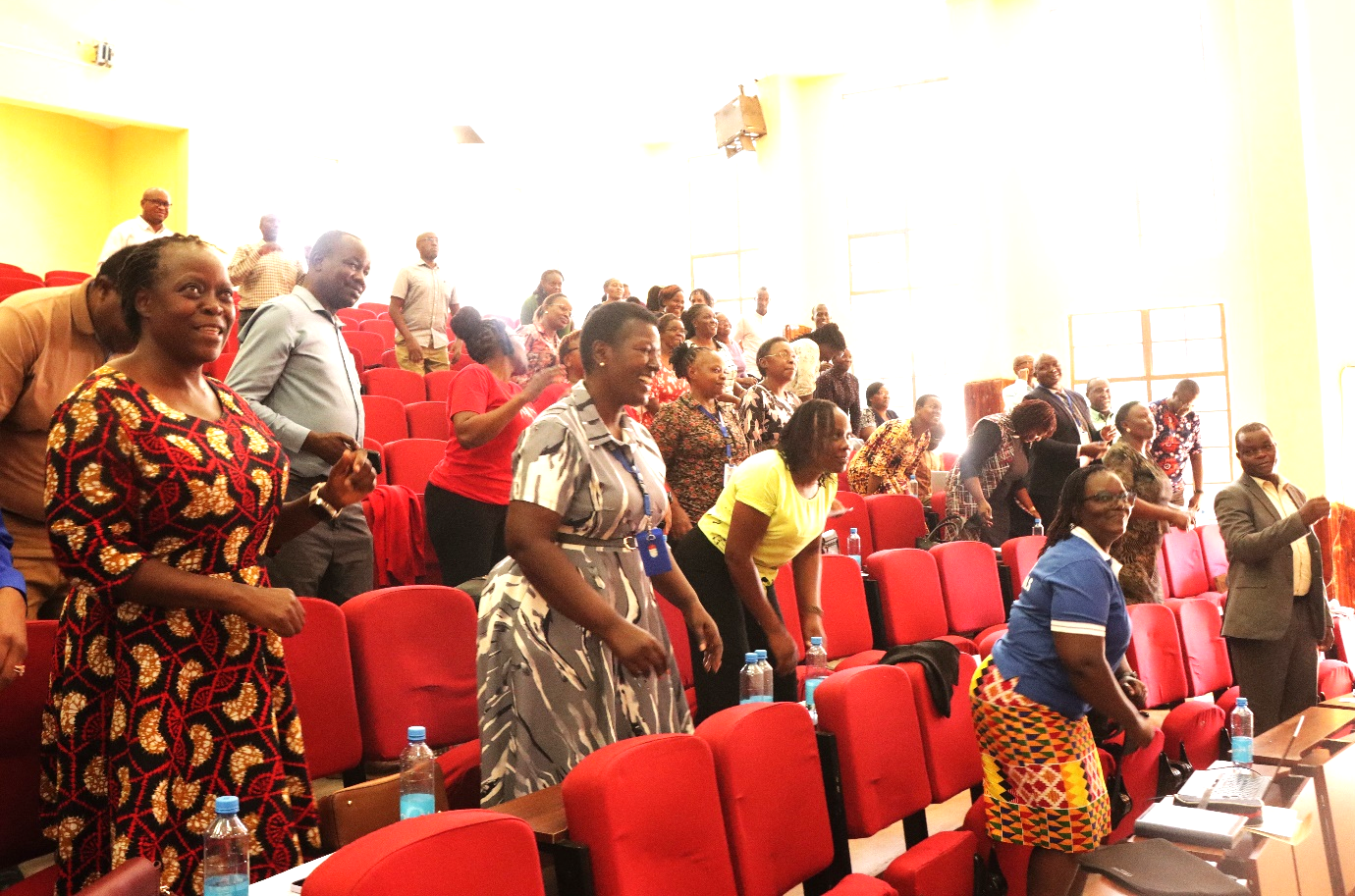
To reinforce that mental wellness is holistic, the workshop incorporated music, light exercise, and movement sessions, demonstrating how simple interventions can reduce stress and restore emotional balance. Facilitators also introduced practical coping tools, including breathing exercises, mindfulness, grounding techniques, and early screening for anxiety and depression.
The workshop concluded with commitments from university management to strengthen mental health programming through screening sessions, stress management forums, and continued engagement with mental health professionals.
“Mental health is no longer something we hide or ignore,” said Dr. George Aberi, a lecturer at Kisii University and a passionate mental health crusader. “It affects everyone: students, professionals, parents, and youth alike. If you are alive, you need mental health support. Caring for your mind is just as vital as caring for your body. Seeking help is not a sign of weakness; it is a courageous step toward a balanced, productive, and meaningful life. Mental wellness is the foundation for resilience, growth, and happiness, and it’s time we treat it with the priority it truly deserves.”

A Model for Higher Education
As the sessions ended with reflection, music, and shared dialogue, the message was clear: mental wellness is not an individual burden but a shared institutional responsibility. By confronting stigma, encouraging empathy, and investing in support systems, Kisii University is positioning itself as a model for promoting mental wellbeing in higher education. Organizers expressed hope that the initiative would inspire similar conversations across universities nationwide, affirming that mental health is integral to academic success, workplace productivity, and human dignity.

Media Advocacy
Elijah Nyaanga, Group CEO of Scholar Media Africa, reaffirmed the media organization’s commitment to highlighting stories on mental health, not only in Kenya but across Africa and beyond. He emphasized that sustained media focus can increase awareness, reduce stigma, and encourage institutions and governments to prioritize mental wellbeing.
“Mental health is an evergreen topic. By sharing real stories, research, and best practices, Scholar Media Africa seeks to empower communities, inform policy, and foster a culture of mental wellness that transcends borders,” he said.
Nyaanga noted that media advocacy can bridge gaps between academic institutions, workplaces, and families, offering both practical guidance and visibility to this pressing issue.
YOU MAY ALSO LIKE: Research-based Counselling, Silver Bullet to Mental Health Puzzle