















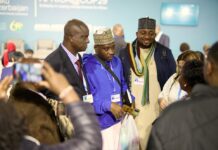















- For Edinah Kangwana MBS, meaningful networks are not measured in likes or followers, but in authenticity, trust, and intentional engagement.
- In her keynote speech, Pamela Magwaro underscored that trust begins with self-trust, emphasizing that leaders must first build honest relationships with themselves before they can authentically connect with others.
- As the session closed, one theme resonated above all: social capital is the true wealth of leadership. It is not about titles or visibility, but about connection, contribution, and collaboration.
Our networks must go beyond being social; they must be strategic. Built on trust, inclusion, and purpose, they become the pathways through which transformation flows.
Dr. Edinah Kangwana MBS, DHL, Founder & CEO, Arise Circle KE.
In an age where influence is measured less by corner offices and more by connection, social capital has emerged as the new currency of leadership; shaping trust, innovation, and transformation across Africa.
This reality came alive at Kwanza Place, Kisii-Kenya on October 8, 2025, where leaders, professionals, and changemakers gathered for the Arise Circle Roundtable Leadership Conversations, a signature series curated and hosted by Edinah Kangwana, Founder and CEO of Arise Circle KE.

This season’s dialogue, themed “Social Capital: Networks as the New Leadership Currency — The Art of Building and Leveraging Networks for Transformation”, explored how meaningful networks and authentic relationships are driving modern leadership, community empowerment, and personal growth.
Leadership Beyond Titles: Edinah Kangwana’s Reflections
Opening the session, Edinah Kangwana MBS challenged participants to rethink leadership. No longer about titles or authority, she said, leadership today is defined by relationships, trust, and the communities we empower.
“Social capital,” she noted, “is the true wealth of modern leadership; the ability to connect, collaborate, and create shared value.”
Drawing inspiration from Ubuntu, “I am because we are”, she reminded the audience that Africa’s greatest asset is its collective resilience.
“In a time when the world is technologically connected yet socially disconnected,” she cautioned, “our networks must go beyond being social; they must be strategic. They should act as bonds, bridges, and linkages through which transformation flows.”
For Edinah, meaningful networks are not measured in likes or followers, but in authenticity, trust, and intentional engagement. Her personal journey, from banking to public service to leadership consultancy, is living proof that social capital opens doors, enables transitions, and sustains influence.

Keynote: Redefining Leadership through Social Capital
The keynote address came from Pamella Magwaro, Principal of Riodonga High School — a respected educationist, woman in STEM, and gender champion.
“Social capital is the glue of society,” she declared. “It binds communities, enhances cooperation, and fuels collective growth.”
Magwaro redefined leadership not as authority or control, but as influence and service:
“Leaders are team players. They inspire, listen, and create spaces for others to contribute. Leadership today is measured not by titles, but by action, impact, and the ability to connect people and ideas.”
She underscored that trust begins with self-trust. Leaders must first build honest relationships with themselves before they can authentically connect with others.
Her challenge to today’s leaders was clear: “Be visible, be consistent, be trustworthy. Invest in relationships that create value: for yourself, your team, and society.”


Social Capital as Investment for Impact
Deborah Monchari, Project Coordinator of the Muungano Gender Forum, expanded the conversation by framing social capital as an investment for social, political, personal, and economic impact.
“Social capital is earned, not given,” she emphasized. “It grows through authenticity, consistency, and the deliberate creation of value.”
She encouraged leaders to nurture personal brands rooted in values and credibility: “Don’t pull others down to shine; your light is not diminished by another’s glow.”

For Monchari, conversations themselves are bridges, whether through a smile, a two-minute chat, or a professional forum. But networks flourish only when individuals show up, engage, and follow through.
“Social capital,” she concluded, “is about looking, listening, and linking. It’s the art of showing up, staying connected, and creating value in every interaction.”

A Message on Social Capital
Joining virtually, Elijah Nyaanga, CEO of Scholar Media Group Africa (SMEGAfrica), underscored the reality that “your network is your net worth.” Drawing from nearly two decades of personal experience, he shared how his phone book today holds over 9,500 contacts, a network intentionally built across the world for the last 18 years, largely through social media.
“These are not just big numbers,” he explained, “but quality relationships that have enabled me to create national, continental, and global platforms, all of which have elevated the visibility of Scholar Media Africa.”
For Nyaanga, social capital is not simply about connection, but about strategic use and value creation. He challenged leaders to invest in their networks with purpose and to embrace the discipline of monetizing them wisely: “If we use our networks well, and learn to monetize them strategically, the returns can be transformative.”
Panel Dialogue: Trust, Connection, and Collaboration
A dynamic panel followed, moderated by Jairus Kibagendi – counselling psychologist, DEI champion, and Founder of A Million Hugs.

The panelists included:
- Stephen Oriki: Banker, on intentional follow-up and genuine care in relationships.
- Calvin Kiyondi: IT professional and entrepreneur, on the power of trust-based referrals in business.
- Peris Ongori: Kisii National Polytechnic, on investing in growth-oriented networks.
- Violet Nyapara: Aspiring politician, on social capital as a powerful lever for women’s political inclusion.
- Linet Moruri: PR & Communications expert, CEO JSM, on allyship and trust as cornerstones of women’s leadership.
- Margaret Mogaka: Oncology nurse & mental health advocate, on expanding professional and community impact through networks.

Scholarly Insights: The Science of Relationships
The roundtable also featured sharp insights from thought leaders:
- Dr. Walter Okibo, University Lecturer & Strategist, stressed the need for intentional, strategic investment in relationships.
- Dr. Vincent Sagwe, DHL, Leadership Coach, urged leaders to view networks as shared resources, not possessions, while emphasizing mentorship and reciprocity.
- Donah Onguti, Physiotherapist & Author, emphasized self-awareness over competition, affirming that purpose-driven leaders attract authentic networks.


Adding to the reflections, Owen Oirere, an Arise Circle mentee, testified how the forum has been a bridge to mentorship and career growth.
Visiting intern Saara Oulujarn from Finland also shared how the experience was “eye-opening,” demonstrating how authentic mentorship and inclusive networks can birth transformation.

A Call to Action: Relationships as Bridges to Transformation
As the session closed, one theme resonated above all: social capital is the true wealth of leadership.
It is not about titles or visibility, but about connection, contribution, and collaboration.
“Our relationships,” Edinah Kangwana concluded, “are the bridges to transformation. When built on trust, inclusivity, and purpose, they become the pathways through which leadership and impact flow.”

Through the Arise Circle Leadership Conversations, Edinah and her team continue to shape a movement; curating authentic spaces where Africa’s next generation of leaders can grow, connect, and transform communities.
Here, leadership is not just spoken of, it is lived: in trust, in networks, and in the power of human connection.
YOU MAY ALSO LIKE: Arise Circle’s Roundtable Conversations equip professionals for BANI uncertainties
Arise Circle’s Round Table Conversations tackles future leading, opens lenses on way forward
PICTORIAL