



























- Prof. Ngugi grew up during the tumultuous period of British colonial rule. His early experiences, including the Mau Mau uprising, deeply influenced his worldview and later works.
- His literary career began with the publication of Weep Not, Child in 1964, the first major novel in English by an East African
- At Scholar Media Africa, we are committed to honoring Prof. Ngugi wa Thiong’o’s legacy by continuing to promote African literature, languages, and cultures. We believe that by embracing our heritage and telling our own stories, we can shape a future that reflects the true essence of Africa.
On May 28, 2025, the world bid farewell to one of Africa’s most profound literary voices, Prof. Ngugi wa Thiong’o, who passed away at the age of 87 in Buford, Georgia, USA. The news did not mark the end of an era, but a seismic shakeup. It was a wake-up call. A passing of a literary torch that now burns in the hands of a new generation across the continent and beyond.
Early Life and Education
Born James Ngugi on January 5, 1938, in Kamiriithu, near Limuru, Kenya, Prof. Ngugi grew up during the tumultuous period of British colonial rule. His early experiences, including the Mau Mau uprising, deeply influenced his worldview and later works. He pursued his education at Makerere University in Uganda and later at the University of Leeds in the UK, where he honed his literary skills and began to question the colonial narratives prevalent in African literature.
Literary Journey and Political Activism
Prof. Ngugi literary career began with the publication of Weep Not, Child in 1964, the first major novel in English by an East African. This was followed by The River Between (1965) and A Grain of Wheat (1967), which explored themes of colonialism, resistance, and the complexities of post-independence Africa.
In the 1970s, Prof. Ngugi made a conscious decision to abandon writing in English, choosing instead to write in his native Gikuyu language. He believed that language is a carrier of culture and that writing in indigenous languages was essential for true decolonization. This shift was not just linguistic but also political, challenging the dominance of colonial languages in African literature.
His play Ngaahika Ndeenda (I Will Marry When I Want), co-authored with Ngũgĩ wa Mirii and performed at the Kamiriithu Community Education and Cultural Centre, was a bold critique of the Kenyan government’s corruption and inequality. The play’s popularity among the masses led to Prof. Ngugi’s arrest and imprisonment without trial in 1977. During his incarceration, he wrote Devil on the Cross on toilet paper, a testament to his unwavering commitment to storytelling and resistance.
Exile and Continued Advocacy
Following his release, Prof. Ngugi faced continued harassment from the Kenyan government, leading to his exile in 1982. He lived in the UK and later the United States, where he continued to write, teach, and advocate for African languages and cultures. His seminal work, Decolonising the Mind (1986), remains a critical text in post-colonial studies, emphasizing the importance of language in the liberation of African peoples.
Despite being away from home, Prof. Ngugi never ceased to engage with Kenyan and African issues. His later works, including Matigari (1986) and Wizard of the Crow (2006), blend satire, folklore, and political critique, reflecting the complexities of African societies. He also penned memoirs like Dreams in a Time of War (2010) and Birth of a Dream Weaver (2016), offering insights into his personal journey and the broader African experience.
Legacy and Impact
Prof. Ngugi’s contributions to literature and cultural discourse are immeasurable. He was a staunch advocate for the preservation and promotion of African languages, arguing that true liberation could only be achieved when Africans embraced their linguistic heritage. His works have been translated into over 30 languages, and he received numerous accolades, including multiple honorary doctorates and international literary awards.
Beyond his writings, Prof. Ngugi’s life was a testament to resilience and unwavering commitment to justice. He endured imprisonment, exile, and even a politically motivated attack upon his return to Kenya in 2004. Yet, he remained steadfast in his mission to decolonize African minds and narratives.
A Loss for Kenya and Africa
The passing of Prof. Ngugi wa Thiong’o is a profound loss for Kenya and the African continent. He was not just a writer but a cultural icon, a voice for the voiceless, and a beacon of hope for many. His critiques of colonialism, neocolonialism, and authoritarianism resonated deeply with readers and activists alike.
As we mourn his loss, we also celebrate his life and the indelible mark he left on literature and society. Prof. Ngugi’s vision of a decolonized Africa, where indigenous languages and cultures thrive, remains a guiding light for future generations.

Carrying Forward the Legacy
At Scholar Media Africa, we are committed to honoring Prof. Ngugi wa Thiong’o’s legacy by continuing to promote African literature, languages, and cultures. We believe that by embracing our heritage and telling our own stories, we can shape a future that reflects the true essence of Africa.
Prof. Ngugi once said, “Resistance is the best way of keeping alive.” In his spirit, we pledge to resist cultural erasure, to champion our languages, and to ensure that the stories of Africa are told by Africans, in our own voices.
Rest in power, Prof. Ngugi wa Thiong’o. Your words will continue to inspire and guide us.
YOU MAY ALSO READ: A Sad Day for Africa: Mourning the Loss of Prof. Charles Mwewa, A Visionary Pan-Africanist







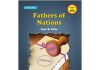



May the legend,griot,father of African Literature rest in peace🕊.
He will forever remain in our hearts.
A Literary Lion Sleeps — Rest in Power, Ngũgĩ wa Thiong’o 🕊️
Today, the ink runs dry.
The voice that shook thrones with a pen of fire is silent. Ngũgĩ wa Thiong’o — the craftsman of courage, the scribe of our souls — has taken his final bow. Back in high school, your play “I Will Marry When I Want” lit a flame in my young mind.
Your words weren’t just read — they roared through the classroom like thunder cracking colonial skies.
Your characters danced off the page and marched straight into our hearts, demanding truth, justice, and dignity. And how can I forget your raw wisdom?
“A man brags about his own penis, however small it may be.”
Crude? No.
Cracked with wit and swollen with meaning.
It whispered a gospel of self-pride — a sermon on loving one’s roots, however humble they may seem.
You wrote in mother tongues when the world demanded foreign tongues.
You chose bars over betrayal.
Your ink was rebellion. Your pages were prophecy.
Today, the world mourns a mind.
But I — I mourn my mentor in metaphor, my champion of choice, my professor of pride.
May the winds carry your spirit to the ancestors.
May the earth cradle your bones like the legend you are.
And may we who remain pick up your pen and write the freedom you dreamed.
Rest in eternal power, Ngũgĩ. The story will never end. Abiriga Isaac from Muni University Uganda.
Indeed we have lost an Icon but his legacy lives on. RIP Prof.
Thank you ScholarMedia and keep the fire burning.