

















- From the dark dungeons of Nyayo House to the grand podiums of continental summits, Raila’s life was a defiance of chains.
- Raila is gone, but in Prof. Okoth’s words, he becomes immortal, a storm, a guide, a lion whose roar echoes through generations.
- Raila Odinga leaves behind more than political battles. He leaves a legacy of courage in the face of oppression, vision in times of despair, and love for a nation still in search of its true freedom.
From the Chains of Nyayo’s Cells to the Torch of Devolution, Raila’s Legacy Burns Bright
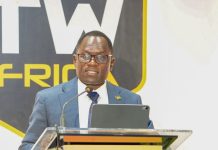
In a hushed hall draped with the weight of history, Prof. Maurice Oduor Okoth, a Professor of Chemistry at the University of Eldoret, former Vice-Chancellor, and Higher Education expert and Quality Assurance Consultant, rose to eulogize a man whose name had long transcended politics to become synonymous with Kenya’s conscience.
His words, wrapped in poetry, are not merely a farewell but a tapestry of a nation’s struggle, resilience, and hope, all embodied in one man: Rt. Hon. Raila Amolo Odinga.
“In the dawn of a wounded nation’s cry, you rose, son of the lakes and sky,” began Prof. Okoth, his voice both tremulous and firm. It is not just the recounting of a life but the summoning of memories etched deep in Kenya’s collective soul.
The Man Who Refused to Bow
From the dark dungeons of Nyayo House to the grand podiums of continental summits, Raila’s life was a defiance of chains. Prof. Okoth captures it vividly: “They jailed your body, but not your fire. They crushed your hope, yet you climbed higher.”
Those who remember the 1980s cannot forget the endless nights when democracy seemed like a fading dream. Raila, imprisoned multiple times, stood as a symbol of defiance. He bore the bruises of solitary confinement, yet emerged with a vision not for vengeance, but for freedom.
It was this unyielding courage that turned him from prisoner to prophet, from opposition leader to the father of Kenya’s second liberation.
The Architect of Dreams
Prof. Okoth’s eulogy is more than verse, it is a roadmap of Raila’s lifelong mission. “Devolution born from your endless plea, that every child may rise and see. The roads, the rails, the ports, the dreams, flow through your vision’s tireless streams.”
Indeed, Raila was not only the politician who challenged power but also the visionary who imagined a Kenya where every county mattered. Devolution, enshrined in the 2010 Constitution, bore his fingerprints. Infrastructure projects like the Standard Gauge Railway, the expansion of roads, and regional ports were partly fruits of the seeds he planted.
To his supporters, he was “Baba,” a father figure who not only dreamed but also fought for their right to dream.
A Healer in Times of Division
History will also remember Raila for his courage to reconcile. The “Handshake” of 2018 with his long-time rival, President Uhuru Kenyatta, was not weakness but statesmanship.
“The handshake, a healing flame, a mark of peace beyond all blame,” intones Prof. Okoth.
That moment calmed a nation teetering on the brink, and though controversial, it underscored Raila’s commitment to unity over personal gain.
The Eternal Messenger
Prof. Okoth’s words extend beyond the present into the realm of memory, calling upon Raila to deliver messages to fallen comrades: to Wangari Maathai, that Kenya’s hills still bloomed green, to Kenneth Matiba and Charles Rubia, that their seeds of struggle had borne fruit, and to his father, Jaramogi Oginga Odinga, that his son had not only kept the torch alive but had ignited a nation’s eternal flame.
“History’s tide can never erase the son who runs Kenya’s freedom race,” he concludes, his voice breaking into silence as the audience rises in solemn applause.
Raila is gone, but in Prof. Okoth’s words, he becomes immortal, a storm, a guide, a lion whose roar echoes through generations.

Who Was Raila Amolo Odinga?
Raila Odinga (January 7, 1945 – October 15, 2025) was more than a politician, he was a statesman, reformer, and enduring symbol of Kenya’s struggle for democracy. He passed away at the Nairobi Hospital after a short illness.
Early Life and Education: Born in Maseno, Raila was the son of Jaramogi Oginga Odinga, Kenya’s first Vice President and a central figure in the independence struggle. Educated in East Africa and later in Germany, Raila studied engineering but carried the spirit of activism from his father’s lineage.
Prison and Exile: Raila was imprisoned without trial for nearly a decade under the Moi regime, accused of involvement in the 1982 attempted coup. Despite brutal conditions, his resolve for democracy deepened.
Political Career: Raila was a multi-decade opposition leader who never shied from challenging the status quo. He played a pivotal role in Kenya’s 1990s pro-democracy movement, leading to multi-party democracy in 1992.
Reform Champion: A strong advocate of constitutional reforms, Raila’s push for devolution, transparency, and people-centered governance culminated in the 2010 Constitution.
Prime Minister: Raila served as Kenya’s second Prime Minister (2008–2013) in the Grand Coalition Government following the disputed 2007 elections. His tenure saw significant infrastructure development and reconciliation efforts.
Continental and Global Influence: Beyond Kenya, Raila was a Pan-Africanist, often advocating for unity, equity, and Africa’s rightful place in global affairs. He also served as AU High Representative for Infrastructure Development.
The People’s Leader: Despite never ascending to the presidency, Raila remained a revered figure, loved by millions for his resilience, generosity, and ability to inspire hope.

A Continental Tribute
As tributes poured in from across the world, the Africa Chamber of Leaders (AFCoL) and Scholar Media Group Africa (SMEGAfrica) captured the essence of Raila’s towering influence in a condolence message shared by their President and CEO, Mr. Elijah Nyaanga Scholarman Snr.
The message described Raila as “more than a political leader, but a statesman, a freedom fighter, a reformist, and a towering figure whose courage, sacrifice, and resilience shaped Kenya’s democratic journey.” It emphasized that his life was dedicated to justice, equality, and the empowerment of the African people, leaving behind a legacy to inspire generations.
Raila, it noted, embodied the spirit of leadership that AFCoL and SMEGAfrica stand for, “visionary, people-centered, and transformative.” His belief in democracy, human rights, and inclusive governance influenced not only Kenya’s destiny but also elevated Africa’s voice on the global stage.
To his family, the people of Kenya, and the world, the condolence message urged strength in the knowledge that the ideals he stood for: freedom, unity, and justice remain etched in the history of the continent. Even as his voice fell silent, the dream he carried for a better, united, and prosperous Africa will continue to inspire leaders across generations.
The Legacy Lives On
Raila Odinga leaves behind more than political battles. He leaves a legacy of courage in the face of oppression, vision in times of despair, and love for a nation still in search of its true freedom.
He was, as Prof. Okoth’s eulogy declares, Kenya’s eternal flame, a fire that prison walls could not extinguish, rivals could not silence, and time itself will not erase.

Author’s Note
This feature draws from the poetic eulogy delivered by Prof. Maurice Oduor Okoth, Professor of Chemistry at the University of Eldoret, former Vice-Chancellor, Higher Education expert and Quality Assurance Consultant, and from the continental condolence message shared by Mr. Elijah Nyaanga Scholarman Snr, President of the Africa Chamber of Leaders (AFCoL) and CEO of Scholar Media Group Africa (SMEGAfrica).
Together, their words remind us that Raila Odinga’s story is not just Kenya’s story, but Africa’s story, one of resilience, justice, and the eternal flame of freedom.
YOU MAY ALSO READ: Charles Omuga Kabisae: The Golden Voice of Kenyan Broadcasting Falls Silent