
























- Aside from being the sitting President of COP28, Al Jaber is also the Chief Executive of the United Arab Emirates’ state oil company, Adnoc.
- Other world leaders who disagreed with the COP-28 President were Prof. Sir David King, the chair of the Climate Crisis Advisory Group and a former UK chief scientific adviser.
- Amidst the controversies unfolding as the summit continued, Pope Francis sent a message of hope, peace, and love for the environment from the Vatican.
While phasing out fossil fuel (oil, gas and coal) production has been the pivotal agenda of world leaders in mitigating climate change, the President of COP-28, Dr. Sultan Al Jaber, stirred controversy on its reduction.
Al Jaber claimed there is “no science” indicating that a phase-out of fossil fuels is needed to restrict global heating to 1.5°C, saying a phase-out of fossil fuels would not allow sustainable development “unless one wants to take the world back into caves”.

Scientists attending the climate summit said the comments were incredibly concerning and verging on climate denial and were at odds with the position of the United Nations Secretary General, António Guterres.
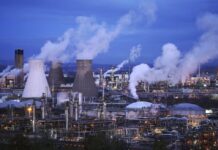
Aside from being the sitting President of COP28, Al Jaber is also the Chief Executive of the United Arab Emirates’ state oil company, Adnoc, which many observers see as a serious conflict of interest.
Crisis at COP-28
Climate reports by environmental bodies such as the United Nations Environment Programme (UNEP) show that deep and rapid cuts are needed to bring fossil fuel emissions to zero and limit fast-worsening climate impacts.
More than 100 countries already support a phase-out of fossil fuels and whether the final COP-28 agreement calls for this phase-down is one of the most fiercely fought issues at the summit and may be the key determinant of its success.
“The science is clear. The 1.5°C limit is only possible if we ultimately stop burning all fossil fuels -not reduce, not abate, but a phase out, with a clear timeframe,” UN Secretary-General António Guterres told COP-28 delegates on Friday.

In his reaction to Al Jaber’s thoughts on fossil fuel phase-out, Bill Hare, the Chief Executive of Climate Analytics, said the move was a denial of climate change.
“This is an extraordinary, revealing, worrying and belligerent exchange which sends us back to caves and is the oldest of fossil fuel industry tropes: it’s verging on climate denial,” said Mr. Hare.
Other world leaders who disagreed with the COP-28 President were Prof. Sir David King, the chair of the Climate Crisis Advisory Group and a former UK chief scientific adviser.
He observed, “It is incredibly concerning and surprising to hear the Cop28 president defend the use of fossil fuels. It is undeniable that to limit global warming to 1.5°C we must all rapidly reduce carbon emissions and phase-out the use of fossil fuels by 2035 at the latest. The alternative is an unmanageable future for humanity.”

Additionally, Dr. Friederike Otto of Imperial College London, UK, also disagreed with Al Jaber, saying that continuing to burn fossil fuels will expose more vulnerable communities to the adverse effects of climate change.
“The science of climate change has been clear for decades, we need to stop burning fossil fuels. A failure to phase out fossil fuels at Cop28 will put several millions more vulnerable people in the firing line of climate change. This would be a terrible legacy for Cop28,” he made a remark.
The methane pledge
As the fourth day of this year’s UN climate conference got underway, the UN chief stated that most pledges made by different nations were falling short.
Reacting to the pledge announced on Saturday by several major oil and gas companies to reduce methane leaks from their pipelines by 2030, Mr. Guterres said it is a “step in the right direction”, but the promise failed to address a core issue, namely, eliminating emissions from fossil fuel consumption.

Kenya, Angola, Romania, Kazakhstan and Turkmenistan also joined the Global Methane Pledge.
Methane (CH4) is a primary component of natural gas and is responsible for about a third of the planetary warming we see today.
The component is short-lived but is more powerful than carbon dioxide, the greenhouse gas most responsible for climate change; without serious action, global anthropogenic methane emissions are projected to rise by up to 13 percent between now and 2030.
The Secretary-General also pointed out that the methane pledge did not provide clarity on the pathway to reaching net zero by 2050, which is absolutely essential to ensure integrity.

“There must be no room for greenwashing,” he said, referring to the dangers involved in promoting deceptive marketing and false claims of sustainability.
The Secretary-General also commented on the groundbreaking Early Warnings for All Initiative he launched last year, saying it had an aim to protect everyone from hazardous weather, water or climate through life-saving early warning systems by the end of 2027.
“This is an ambitious goal – but it is achievable. To make it a reality, we need all hands-on deck, collaborating and cooperating in a way that has not been done before,” he told delegates at Sunday’s main event on the issue.
Mr. Guterres also launched a new report prepared by the UN Office for Disaster Risk Reduction (UNDRR) and the UN World Meteorological Organization (WMO), which shows that more lives are being protected from extreme weather and dangerous climate change impacts, but the pace of progress remains insufficient.
Climate call from Vatican
Amidst the controversies unfolding as the summit continued, Pope Francis sent a message of hope, peace, and love for the environment from the Vatican.
Delivering the Pope’s message, Cardinal Pietro Parolin urged the United Nations climate summit in Dubai to achieve a breakthrough and become a turning point for the world by charting a path for the elimination of fossil fuels.
“Now more than ever, the future of us all depends on the present that we now choose. It is essential that there be a breakthrough that is not a partial change of course, but rather a new way of making progress together,” read Parolin, the Secretary of State for the Holy See.
Through the cardinal, the Pope sought to deliver a forceful message to world leaders and negotiators in Dubai that alternated between encouraging and searing.
“We must answer now; are we working for a culture of life or a culture of death? To all of you I make this heartfelt appeal – let us choose life! Let us choose the future!” read the statement.
Further, the Pope hoped that this summit would be a uniting point for all nations, as they demonstrate a clear and tangible political will that can lead to a decisive acceleration of ecological transition.

“This is possible through means that meet three requirements. They must be efficient, obligatory and readily monitored and achieved in four sectors: energy efficiency, renewable sources, the elimination of fossil fuels and education in lifestyles that are less dependent on the latter,” Parolin further read into the statement.
Numerous countries, alongside civil society groups including faith-based organizations, have pressed nations at COP-28 to agree to the full phase-out of fossil fuels and reduce methane emissions.
RELATED STORY: Expectations high in global climate action as Dubai hosts COP-28
In the final remarks, the Pope called the destruction of the environment an offense and sin against God, one that greatly endangers all human beings, especially the most vulnerable in our midst, and threatens to unleash a conflict between generations.