






























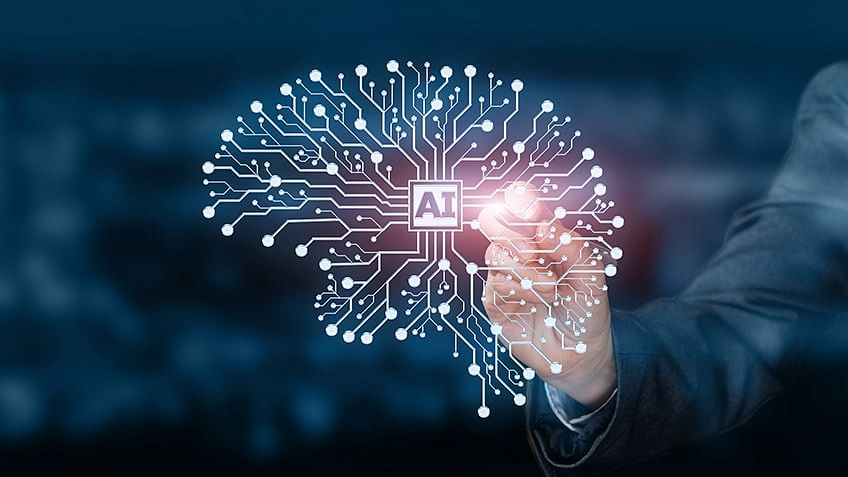
- The world is experiencing a deep and far reaching transformation as rapid technological advancements continue to reshape how people live, work, communicate, and understand their place in society.
- While innovation offers significant opportunities for economic growth, improved living standards, and global connectivity, it also introduces complex challenges that require thoughtful and responsible responses.
- The direction of the future will largely depend on the choices humanity makes today in guiding, regulating, and applying emerging technologies for the collective good.
A profound transformation is unfolding across the world, not with the noise of political upheaval or the spectacle of industrial revolution, but with a quiet and persistent force that is steadily reshaping human existence. Artificial Intelligence has emerged from the margins of academic inquiry and speculative fiction to become one of the most decisive influences of the twenty first century. It is no longer a distant promise. It is present, active, and deeply embedded in the systems that govern how people live, work, think, and relate to one another.
At its essence, Artificial Intelligence refers to the ability of machines to perform tasks that once required human intellect. These tasks range from recognizing speech and interpreting images to analyzing vast streams of data and generating complex responses. What distinguishes this technology from earlier forms of automation is its capacity to learn. Through continuous exposure to data, these systems refine their performance, becoming more accurate, more efficient, and increasingly influential in decision making processes that shape everyday life.
Across the globe, communication has been transformed in ways that would have seemed improbable only a generation ago. Digital platforms now connect individuals across continents in real time, dissolving barriers of distance and language. Artificial Intelligence powers the systems that curate information, translate conversations, and shape the flow of global discourse. This has created unprecedented access to knowledge and interaction, but it has also introduced new complexities, as information travels faster than it can always be verified or understood.
Economic systems are undergoing a parallel transformation. Industries that once relied primarily on human labor are now integrating intelligent systems that enhance precision and productivity. In agriculture, data driven insights guide farmers in managing crops and anticipating environmental changes. In finance, advanced algorithms monitor markets, detect irregularities, and execute transactions with remarkable speed. Transportation networks are becoming more responsive and efficient as intelligent systems manage traffic and logistics. These developments are not merely improving existing processes. They are redefining the very structure of economic activity.
Perhaps the most profound impact of Artificial Intelligence is visible in the realm of health and scientific discovery. Medical professionals now have access to tools that can detect patterns in diagnostic data with extraordinary accuracy. Conditions that once required lengthy analysis can be identified in moments, improving the prospects for early intervention and treatment. Research that traditionally unfolded over many years is being accelerated through computational models capable of simulating complex biological processes. This convergence of technology and medicine holds the promise of extending life and improving its quality on a global scale.
Education, too, is being reshaped in significant ways. Learning is becoming more personalized, with systems that adapt to the pace and needs of individual students. This shift has the potential to expand access to quality education, particularly in regions where resources have historically been limited. At the same time, it is redefining the role of the educator, placing greater emphasis on guidance, mentorship, and the cultivation of critical thinking.
Yet, for all its promise, Artificial Intelligence raises questions that cannot be ignored. The displacement of jobs as machines assume tasks once performed by humans presents a serious challenge for economies and societies. Issues of privacy have become more urgent as vast quantities of personal data are collected and analyzed. Concerns about bias in algorithmic systems highlight the risk of reinforcing existing inequalities if these technologies are not carefully designed and monitored. There is also growing unease about the potential misuse of intelligent systems in surveillance and conflict.
Nations are increasingly aware of the strategic importance of Artificial Intelligence and are investing heavily in its development. This global competition is driving innovation at an unprecedented pace, but it also risks deepening divisions between those with access to advanced technologies and those without. The question of who benefits from this transformation is as important as the transformation itself.
Despite its complexity and scale, Artificial Intelligence remains a human creation. It does not possess intention or moral judgment. Its direction is determined by the values and decisions of those who design and deploy it. This reality places a profound responsibility on governments, institutions, and individuals to ensure that its development is guided by principles of fairness, accountability, and shared benefit.
The world now stands at a critical moment. Artificial Intelligence is not simply a tool for progress. It is a force that is reshaping the contours of human existence. It challenges long held assumptions about work, knowledge, and even identity. Its potential is vast, but so too are the consequences of its misuse or neglect.
The future is not predetermined by technology. It is shaped by the choices that accompany it. If guided with wisdom and foresight, Artificial Intelligence can become an instrument for addressing some of humanity’s most pressing challenges. If left unchecked, it may deepen the very problems it has the capacity to solve.
In this unfolding chapter of human history, Artificial Intelligence holds the pen, but it is humanity that must decide what story will be written.
YOU MAY ALSO READ: Use of AI in Research and Postgraduate Supervision: Balancing Efficiency and Academic Integrity