


























- The thread of continuity is clear: each regime enlarged the scope of free and subsidised education, but none has removed the structural fragility that turns policy into unpredictability for schools on the ground.
- Facilitate public–private partnerships (PPP) where schools can work with private firms, county governments, and NGOs to finance infrastructure, ICT labs, or bursary support.
- Principals deserve empathy; for the poison of unsteady funding leaves them between supplier demands and children’s hunger. Parents deserve patience with fiscal realism. The State must ensure that promises of free education are not rhetorical but operational.
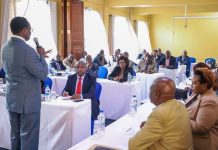
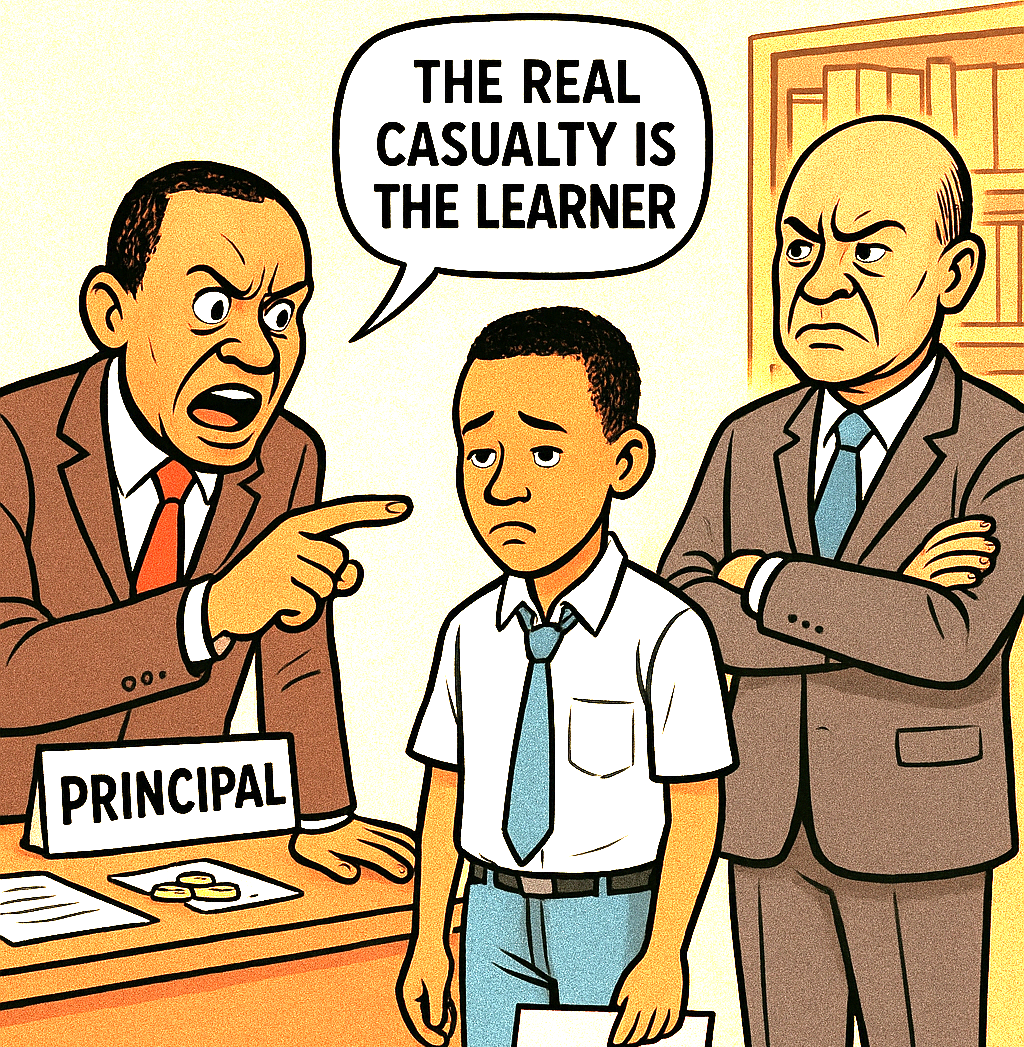
A recent stormy session of ScholarMedia Digital, a prominent national forum convening senior government officers, policy think tanks, educators, civil society leaders, and stakeholders from across the country, laid bare a sobering truth: in the tug-of-war over delayed capitation and shrinking subsidies, the silent casualty is not politics or policy, but the learner.
Weeks before Kenya’s national examinations, a Form Four candidate was told to leave school for failing to clear a KSh28,000 balance. The message, posted by a concerned member on the forum set off a torrent of sharp replies from principals, administrators and parents. Some demanded compassion; others defended the principal’s duty to keep the school running.
That exchange was not merely an argument about one child. It was a glare into a system in which schools juggle supply bills, support staff salaries, and rising food costs, often without the predictable support of the state. The result: principals forced into a moral and managerial squeeze where compassion can look like insolvency.
The Human Moment Behind the Numbers
Messages in the forum captured the rawness of the dilemma. One contributor asked simply: “Why chase away a Form Four student from school because of fees just weeks before exams? Surely, is money worth more than a child’s future?” Another replied: “Pay for the child if you are philanthropic enough.” A principal reminded the group that schools run on cash flow: suppliers must be paid, support staff rely on wages, and boards of management have fiduciary duties.
These are not abstract positions. They are responses shaped by relentless reality: delayed capitation, underfunded vote heads, deductions from grants and a fiscal calendar that often fails to match the school year. The clash of instincts; mercy versus management is the predictable outcome.
How Capitation and Cash-flow Failures Create Moral Dilemmas
Kenya’s capitation grant exists so that education can be affordable and, ideally, predictable. In practice the grant is a per-learner allotment meant to pay for basics: tuition subsidy, activity fees, textbooks, and some boarding support. But when that grant arrives late, short, or after administrative deductions, schools are forced to make impossible choices.
- Disbursement delays have sometimes stretched beyond two months into the school term.
- Audit reports show that in some years, less than 70% of the allocation reached schools on time.
Principals, who are primarily educators, find themselves acting like cash managers. They negotiate with suppliers, juggle salary schedules, and decide who eats today. When the cupboard is bare, the burden often falls on the child.
Three Presidencies, One Fraying Promise
Any honest appraisal must track the arc of policy across three administrations.
- Mwai Kibaki (2003–2013) presided over the introduction of Free Primary Education in 2003 and expanded attention to secondary subsidies thereafter, dramatically increasing access to classrooms across the country. The policy reshaped expectations: education could no longer be a private luxury but a public commitment.
- Uhuru Kenyatta (2013–2022) further institutionalised free day secondary education and in some years increased capitation per learner in an attempt to meet rising costs and enrolment pressures. The rollout of the Competency-Based Curriculum (CBC) also shifted requirements and resource needs for schools.
- Dr. William Ruto (2022–present) inherited promises and a stretched budget. The current administration has faced an acute and visible problem: delays in capitation disbursement, verification exercises, and tensions between fiscal-year cycles and the academic year. The upshot has been public outcries, principals pleading for understanding, and the President himself instructing ministers to fix the alignment of capitation releases.
The thread of continuity is clear: each regime enlarged the scope of free and subsidised education, but none has removed the structural fragility that turns policy into unpredictability for schools on the ground.
The government has failed by making education a constitutional right in word but denying it in practice through chronic delays, underfunding, and mismanagement that leave learners, teachers, and schools in perpetual crisis.
Unions and Associations: Pressure and Protection
Teacher unions (KNUT, KUPPET and others) and associations of school heads (such as KESSHA and county-level principals’ groups) play distinct roles. Unions press for fair pay and working conditions for teachers, crucial if teachers are to remain motivated and present. Heads’ associations press for timely funding and administrative clarity. In the recent weeks, union leaders have engaged directly with State House and the Education Ministry to demand fixes and safeguards for schools, signalling that the crisis has reached the policy centre.
Yet the public debates often flatten nuance: the union’s industrial posture can look like self-interest to cash-strapped parents, while principals’ financial pleas can be mistaken for bureaucratic excuses. In reality, both groups are trying to preserve a fragile institutional ecosystem.
Why This is The Worst Time to be a Principal
Principals now carry five heavy, sometimes contradictory obligations:
- Educator-first expectation: deliver curriculum, prepare candidates, safeguard learning outcomes.
- Cash-manager reality: pay suppliers, feed students, pay support staff, and manage facility maintenance.
- Accountability pressures: show receipts, protect public funds, answer to Boards of Management, County and national education authorities.
- Legal risks: be accused of violating learners’ rights if they are sent away; be sanctioned for poor financial controls if funds go missing.
- Moral burden: decide between mercy and duty — which child stays, who gets food, and who goes home hungry.
No training manual prepares a school head to succeed simultaneously in all five arenas when the state funding pipeline falters.
Practical Fixes, Not Platitudes
The conversation on ScholarMedia Digital ended with compassion: a donor paid the balance. That is exactly the kind of personal generosity that keeps learners in school. But acts of kindness alone cannot be the policy.
Scholar Media Africa offers a short menu of actionable steps for immediate and medium-term relief:
1. Align fiscal and academic calendars
- Problem: The government’s fiscal year (July–June) does not align with the school year (January–December). This mismatch causes late disbursements, leaving schools cash-strapped at term beginnings.
- Solution: Recalibrate either the fiscal disbursement cycle or create a special education funding calendar so that capitation lands in schools two weeks before term start. This ensures schools open with cash flow, not credit.
2. Strengthen data verification systems (KEMIS integration)
- Problem: Delays occur because student numbers, transfers, and dropouts must be verified before funds are released. This bureaucracy punishes schools for errors outside their control.
- Solution: Fully integrate and digitize KEMIS (Kenya Education Management Information System) with NEMIS, and link it to civil registration (birth/admission). Schools should update in real-time, and automated checks can prevent term-long verification delays.
3. Ring-fence essential vote heads (boarding & welfare costs)
- Problem: When capitation is late, schools first cut meals, security, and support staff wages — creating immediate crises.
- Solution: Protect critical vote heads like food, matrons, security, and utilities. Even if disbursements delay, a protected emergency buffer should cover these essentials to avoid hunger and insecurity for learners.
4. Transparent deduction schedules
- Problem: Parents and principals rarely see how much of the capitation is deducted for textbooks, exams, or ministry-managed items. This creates suspicion and mistrust.
- Solution: Publish termly deduction schedules on a public dashboard, breaking down what portion of capitation was withheld and why. Schools and communities should know what was covered centrally versus what they must budget locally.
5. Establish short-term emergency funding facilities
- Problem: When disbursements delay, schools borrow from suppliers or send students home, both of which are harmful.
- Solution: Create county-level revolving funds or an MoE-managed emergency cushion that schools can access with proof of verified shortfalls. These funds would be reimbursed when capitation finally arrives.
6. Enforce accountability and timely remittances
- Problem: Even when the Treasury releases money, bottlenecks occur in ministries or county offices before schools receive it.
- Solution: Introduce statutory deadlines (e.g., schools must receive funds within 7 working days after Treasury release). Publish compliance reports showing which ministries/counties met or failed deadlines.
7. Create a multi-stakeholder oversight board
- Problem: Decisions about education financing are often made without adequate voices from principals, parents, and unions.
- Solution: Form a Capitation Oversight Board that includes Treasury, Ministry of Education, KESSHA (heads), KNUT/KUPPET (teachers), and parents’ representatives. Its role: monitor cash flow, troubleshoot bottlenecks, and advise on vote head adequacy.
8. Encourage alternative financing partnerships
- Problem: Schools rely almost exclusively on government funding and parental fees, leaving them vulnerable.
- Solution: Facilitate public–private partnerships (PPP) where schools can work with private firms, county governments, and NGOs to finance infrastructure, ICT labs, or bursary support. The Ministry should create a framework for vetted partnerships without burdening parents.
9. Introduce performance-linked funding incentives
- Problem: Funding is uniform per learner regardless of school performance in financial management.
- Solution: Schools that consistently manage resources well, file accounts transparently, and avoid debt should be eligible for incentive grants or priority disbursement. This encourages better financial discipline across institutions.
10. Establish parental/community co-responsibility structures
- Problem: Parents often feel alienated, assuming that “free education” absolves them of any shared role. This breeds tension when schools ask for top-ups.
- Solution: Formalize parent–school agreements where communities contribute (in cash or kind) to agreed priorities like water, sanitation, or security. When transparent and modest, such contributions improve ownership and reduce adversarial relationships.
A Call for Balanced Sympathy
The ScholarMedia Digital forum demonstrated its strength as a national space of ideas; one where government officers, scholars, principals and teachers wrestle openly with uncomfortable truths. It showed that sympathy is abundant and often misdirected. Principals deserve empathy; for the poison of unsteady funding leaves them between supplier demands and children’s hunger. Parents deserve patience with fiscal realism. The State must ensure that promises of free education are not rhetorical but operational.
If education is truly a public good, then the public must insist that its financing works. In the meantime, let us not make principals the scapegoats for systems they did not design. Let us instead fix the system so that a single Form Four student’s future is never again held hostage by an empty account.
RELATED: Don’t Betray the Learner: Why Kenya Must Protect Free Education at All Costs