






















- Hon. Millemba warns that senior secondary schools in C4 and C5 are struggling to admit Grade 10 students, while C1–C3 schools absorb most learners. This threatens smaller schools that serve remote communities.
- He plans to table a Parliamentary Motion to move Grades 8 and 9 to senior schools. The goal is to protect these schools, use existing facilities fully, and ensure fair access for all students.
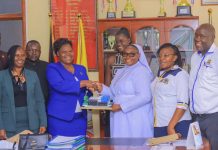
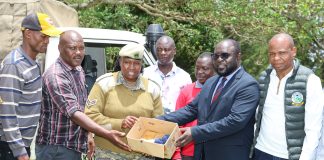
- At Esibila Senior School, he distributed over Ksh 45 million in bursaries and pledged 100% transition from Grade 9 to 10. He also urged the government to implement free education policies for all learners.
As Kenya’s Competency-Based Education (CBE) framework evolves, concerns are rising over gaps that could pose long-term challenges to the education sector. Emuhaya MP Omboko Millemba highlights structural imbalances in senior secondary school enrollment and proposes measures to ensure sustainability and equitable access for all learners.
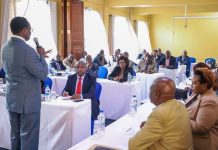
Speaking at Esibila Senior School in Emuhaya Sub-County during a recent bursary distribution ceremony, MP Omboko Milemba observed that schools in categories C4 and C5 are struggling to admit Grade 10 students, while C1, C2, and C3 institutions have already absorbed the majority of learners.
“Our senior secondary schools, particularly those in C4 and C5, face a serious challenge in enrolling Grade 10 students. Many of these schools were established strategically to serve communities with poor transport networks and long distances, making them indispensable for learners who cannot travel far,” the MP said.
He noted that the under-enrollment in C4 and C5 schools has put them at risk of closure, even as they possess essential facilities such as laboratories, libraries, and qualified teachers. The MP warned that failing to address this imbalance early could lead to the underutilization of public resources and a widening inequity in educational access.
To mitigate the problem, MP Millemba plans to table a Motion in the National Assembly proposing the transfer of certain junior secondary classes to senior secondary schools. Specifically, he recommends moving Grades 8 and 9 to these senior institutions.
“This proposal will protect smaller schools, ensure fair access to education for all children, and optimize the use of our senior school infrastructure and personnel,” he explained. The move would also prevent redundancies among teachers and maximize the use of existing facilities, reducing the need for costly new construction projects for junior secondary classrooms.
MP Millemba further called on senior school principals to prepare for the integration of junior secondary learners under fair and manageable terms, with a government capitation fee set at Ksh 15,000 per student. He cautioned that insisting on the current rate of Ksh 22,000 could hinder the implementation of the Motion.
“Principals must be realistic and avoid imposing extra charges on parents. Our goal is to ensure that every child has access to quality education without placing an undue burden on families,” he urged.
During the event, MP Millemba also distributed bursaries totaling over Ksh 45 million, ensuring that every household with a senior school learner received Ksh 5,000. He emphasized his commitment to 100% transition from Grade 9 to Grade 10 and pledged to set aside funds to support students pursuing higher education at universities and middle colleges.
Looking ahead, he called on the government to establish mechanisms to guarantee free education for all, noting that such policies would reduce parental frustrations and prevent bright, needy learners from missing opportunities due to financial constraints.
“We must create an education system that is inclusive, efficient, and capable of delivering opportunities for every child, regardless of their background,” he concluded.
YOU MAY ALSO: Education and Healthcare in Distress: Have Kenya’s National Priorities Lost Their Moral Compass?