
























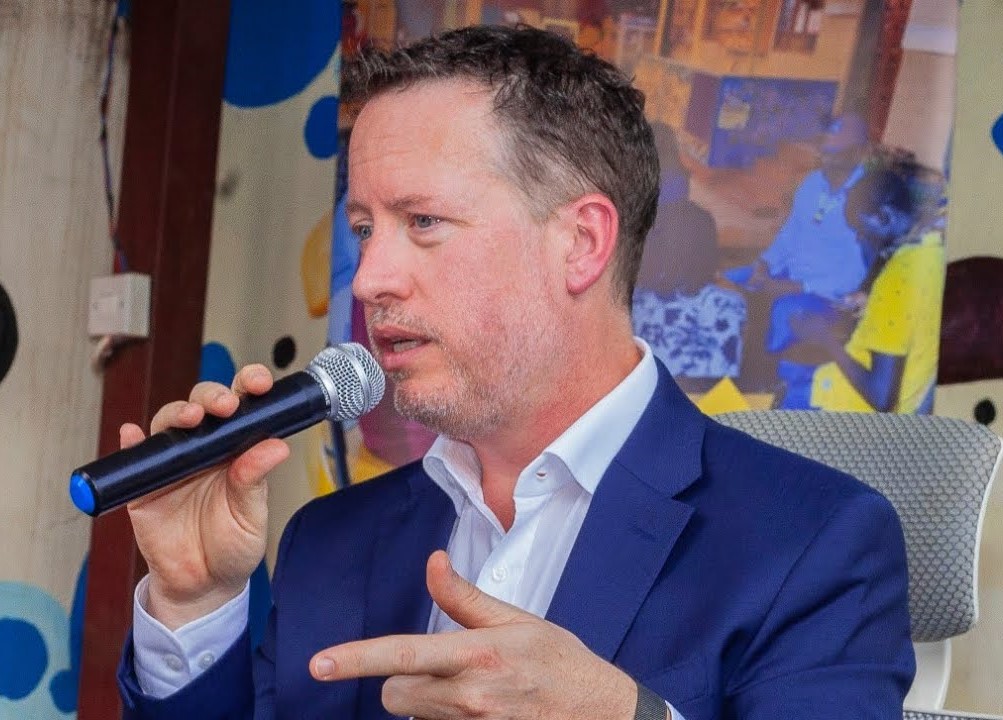
- Canadian banking expert Ryan O’Grady is facing possible extradition from United Arab Emirates to South Sudan after allegations he says emerged from his efforts to strengthen transparency and accountability within a financial institution.
- O’Grady and his supporters argue that the case reflects broader challenges faced by professionals pursuing institutional reform in fragile systems, with growing concerns over due process, prison conditions, and humanitarian risks if extradition proceeds.
- The case has drawn international attention and diplomatic concern from Canada, sparking wider conversations about whistleblowing, financial governance, justice, and the protection of reform-minded professionals working in vulnerable environments.
Before he became the subject of an international extradition battle, Canadian banker Ryan O’Grady had built a reputation in development and humanitarian circles as a professional deeply invested in institution building, financial reform, and community development across Africa.
For years, he travelled extensively across East Africa, engaging with charitable and non-profit initiatives while offering expertise in development finance and institutional growth. Colleagues familiar with his work describe him as a seasoned banking professional who believed strong financial institutions were essential for economic stability, investor confidence, and long-term development.
That background would later shape his entry into South Sudan’s banking sector, where he was recruited to help rebuild confidence in one of the country’s financial institutions during a difficult transition period.
Today, however, the 47-year-old Canadian is at the centre of a legal and humanitarian crisis unfolding thousands of kilometers away from his hometown of Cobourg, Ontario.
O’Grady is currently detained in Dubai’s Al Awir central prison after being arrested in November 2025 following an extradition request linked to allegations originating from South Sudan. The veteran banker says the case against him emerged after he identified irregularities within the financial institution he led and insisted on due diligence, transparency, and stronger compliance systems.
Now facing possible extradition to South Sudan on a breach-of-trust charge, he says his life would be at risk if he is transferred.
“I’m resigned to the stark reality that never again will I see my wife and daughter,” O’Grady said in a voice message from prison shared by his wife, Virginia, and reported by The Globe and Mail.
The Canadian banker says he has suffered deteriorating health conditions during his detention in Dubai, where he reportedly spent more than five months without medical examination or treatment.
“The conditions here are harsh. It took five-and-a-half months to be examined by a doctor and finally to receive medicine,” he said in the recorded message.
“This process has cost me my savings, my income, my reputation, the safety and stability of my family, my freedom, and now in all probability my life.”
Building International Confidence
O’Grady served as Chief Executive Officer (CEO) of a South Sudanese financial institution between 2022 and 2023. According to accounts surrounding his appointment, he was recruited because of his extensive international banking experience and his ability to strengthen institutional credibility.
His mandate reportedly included restoring confidence in the institution, improving international partnerships, attracting investors from the global financial community, and strengthening internal systems to meet international standards.
People familiar with his professional work describe him as highly knowledgeable in international banking systems, governance frameworks, and institutional compliance.
During his tenure, O’Grady said he worked to expand the institution’s operations and improve its financial standing. In a statement issued after his resignation, he noted that the bank’s client base had increased by 68 per cent under his leadership, alongside growth in revenue and profitability.
But while working to restructure operations, he says he encountered serious irregularities in financing arrangements and internal management systems.
According to his account, he insisted on stronger due diligence procedures, questioned questionable financial practices, and advocated for reforms aimed at increasing transparency and integrity.
He also says his work contributed to the resignation of a previous executive and the cancellation of a management buyout arrangement linked to the institution.
“What happens in fragile systems is that accountability can become uncomfortable for people benefiting from weak oversight,” a financial governance analyst familiar with banking reform in emerging economies told Scholar Media Africa.
O’Grady maintains that his efforts to strengthen governance standards ultimately placed him at odds with individuals opposed to institutional reforms.
A Growing Campaign Against Him
By 2023, tensions surrounding his role reportedly intensified.
According to information surrounding the case, a social media campaign emerged targeting his reputation and linking him to allegations connected to South Sudan’s oil sector.
A website known as Kenya Insights published reports alleging “shady” and “opaque” dealings involving O’Grady. However, the reports provided limited details and largely referenced claims from a group identified as South Sudan Truth Defenders, which appeared to have no visible online presence.
O’Grady has consistently denied wrongdoing and maintains that the allegations were part of a broader campaign against him after he attempted to improve transparency and accountability within the institution.
“When you do that, you come head-to-head with the bad actors who profit in the dark corners and shady deals,” he said in the prison voice message.
“Those of us who’ve tried to shed light on that darkness and build something good for the people of South Sudan – we’re losing badly.”
As pressure mounted, O’Grady resigned from his position and relocated to Dubai in 2023.
However, his legal troubles would follow him there.
Arrest and Extradition Battle in Dubai
O’Grady says he became the subject of a 19-month Interpol investigation after South Sudan issued a notice linked to allegations against him.
Despite the investigation, he maintains that no evidence was presented against him during court proceedings in Dubai.
He also says he was not permitted to personally appear before the court during parts of the legal process.
Court rulings reviewed in connection with the matter reportedly provide few details beyond describing the allegation as a breach-of-trust charge.
Senior officials in South Sudan’s foreign ministry and information ministry reportedly did not respond to media inquiries regarding the accusations.
Last week, O’Grady lost an appeal in Dubai after the court approved his extradition to South Sudan, significantly escalating fears about his safety and future.
The ruling means the Canadian banker could be transferred to South Sudan at any moment unless further diplomatic or legal intervention succeeds.
The Canadian banker says such a transfer would effectively amount to a death sentence.
“I’m having to accept the real possibility of losing my life,” he said.
He argues that any legal proceedings awaiting him in South Sudan would not provide meaningful due process and fears he could face torture or severe mistreatment.
The conditions within South Sudan’s prison system have repeatedly drawn criticism from international observers and human rights organizations.
Nicholas Coghlan, a former Canadian ambassador to South Sudan, described O’Grady’s case as appearing to be a “major miscarriage of justice.”
Coghlan noted that South Sudan has frequently faced allegations of widespread corruption and said the country’s prisons are known for overcrowding, harsh conditions, and limited medical care.
Canada’s Diplomatic Response
As the extradition threat intensifies, questions have increasingly focused on Canada’s diplomatic response.
Global Affairs Canada confirmed that it is aware of the detention of a Canadian citizen in the United Arab Emirates and said consular assistance is being provided.
Renelle Arsenault, a spokesperson for Global Affairs Canada, stated that privacy considerations prevent the department from publicly discussing the details of the case or foreign legal proceedings.
Additional concerns about due process emerged following communication involving the Canadian consulate in Dubai.
Ruth Marrocco, an assistant to Conservative Member of Parliament Philip Lawrence, disclosed that the Canadian consulate informed the MP that Canada is formally opposing O’Grady’s extradition to South Sudan.
According to Marrocco, the consulate repeatedly raised concerns surrounding “due process, fair trial guarantees, and the risk of mistreatment.”
The comments were reportedly shared in an e-mail sent to a journalist at Today’s Northumberland, a media outlet based in O’Grady’s hometown of Cobourg, Ontario.
The involvement of Canadian diplomatic officials has intensified international attention on the case, particularly as concerns grow about the humanitarian implications of extradition.
Humanitarian Roots and Institutional Reform
Long before his legal troubles emerged, O’Grady’s work in Africa had largely focused on development-oriented initiatives and institutional strengthening.
Associates familiar with his earlier engagements say he frequently moved between humanitarian, development, and financial sectors, believing that responsible banking systems could play a significant role in rebuilding economies emerging from instability.
His approach to banking reportedly centred on restoring institutional credibility and building systems capable of attracting international trust.
That philosophy shaped his work in South Sudan, where he says he sought to strengthen transparency mechanisms and align operations with international compliance standards.
Observers note that banking reform efforts in fragile economies often place executives under enormous pressure, particularly when attempts are made to challenge existing practices or tighten oversight structures.
For O’Grady, the consequences have evolved into a prolonged legal battle with life-altering implications.
Now imprisoned in Dubai while awaiting extradition, the Canadian banker continues to insist that the allegations against him emerged because he attempted to expose irregularities and improve accountability.
As international attention grows, the case has become a wider conversation about whistleblowing, financial governance, due process, and the risks faced by professionals attempting institutional reform in fragile environments.
For now, he remains in detention, uncertain whether he will return home to Canada or face extradition to a country where he believes his life would be in grave danger.
With diplomatic discussions ongoing and legal avenues narrowing, the case continues to draw scrutiny from observers concerned not only about the fate of one Canadian citizen, but also about the broader questions surrounding accountability, justice, and protection for professionals who challenge financial irregularities within vulnerable systems.