






























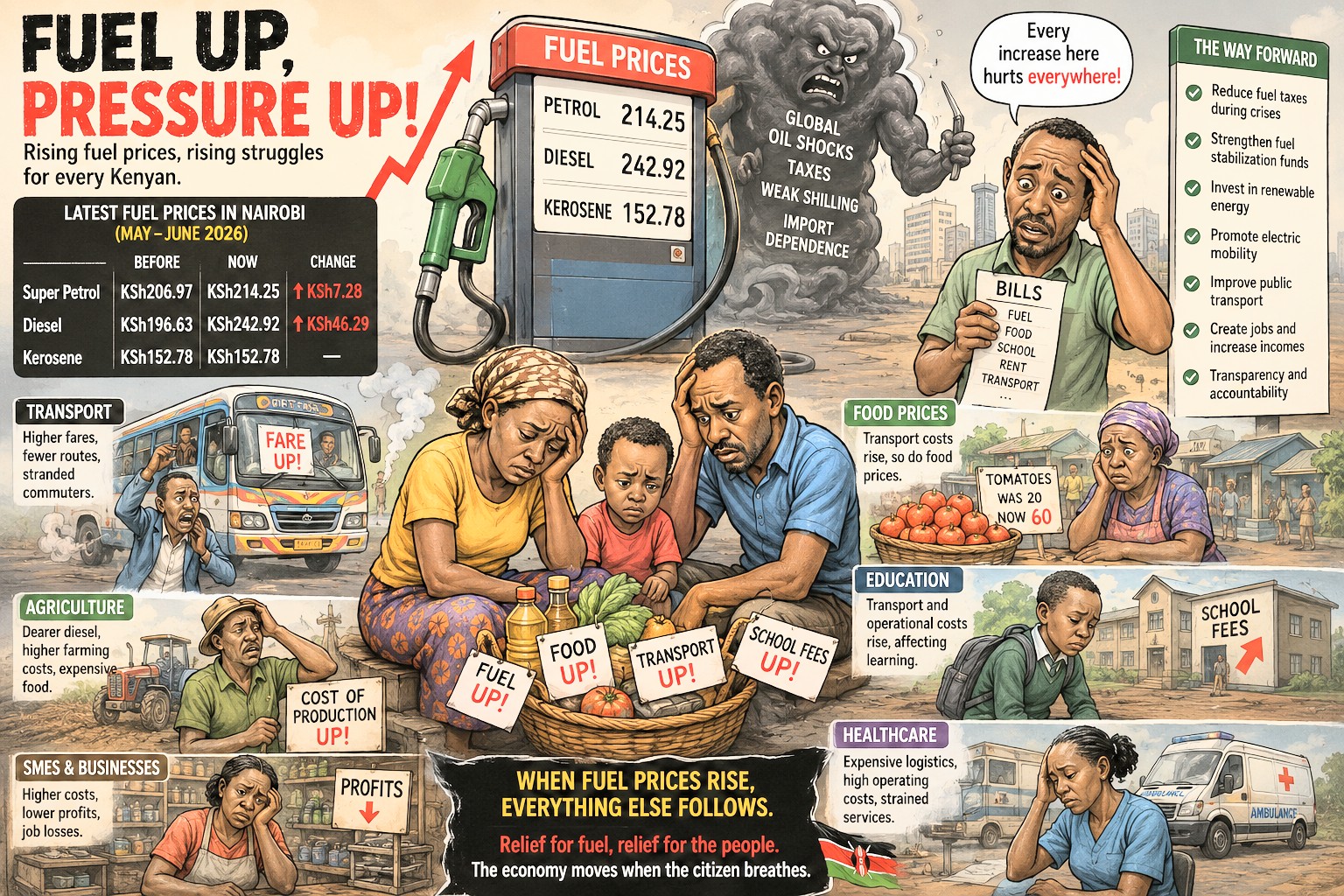
- Rising fuel prices continue to increase the cost of living, placing enormous pressure on households, businesses, and essential sectors of the economy.
- The growing dependence on imported fuel and heavy taxation are exposing deeper structural weaknesses within many African economies.
- Sustainable economic growth requires people-centered policies that balance revenue generation, energy security, and the welfare of ordinary citizens.
Kenya is once again confronting the harsh reality of rising fuel prices, a development that is steadily tightening the economic pressure on households, businesses, and institutions across the country. The latest review by the Energy and Petroleum Regulatory Authority (EPRA) has pushed petroleum prices to levels that many citizens consider unbearable, especially at a time when the cost of living continues to rise while incomes remain largely stagnant.
Under the latest fuel review covering the May 15 to June 14, 2026 cycle, the price of Super Petrol in Nairobi increased from KSh206.97 to KSh214.25 per litre, reflecting an increase of KSh7.28. Diesel recorded the most dramatic adjustment, rising from KSh196.63 to KSh242.92 per litre, an increase of KSh46.29. Kerosene remained relatively stable at KSh152.78 per litre. These changes followed another substantial increase announced only weeks earlier, where fuel prices had already risen sharply before a brief and modest reduction was introduced. The latest review has therefore erased the temporary relief that consumers had started to experience.
The repeated adjustments reveal the fragile state of Kenya’s economy and the heavy dependence of the country on imported petroleum products. Although global oil market instability, currency fluctuations, and geopolitical tensions have contributed to rising fuel costs internationally, the burden within Kenya is being amplified by taxation and the broader economic challenges facing citizens.
Fuel occupies a central position within the Kenyan economy because nearly every productive sector depends on transportation and energy. When fuel prices rise, the effects spread rapidly across the entire economic system. Public transport fares increase, food distribution becomes more expensive, production costs rise, and households are forced to spend more money on essential commodities.
The transport sector is already feeling the pressure. Public service vehicle operators in major towns including Nairobi, Kisumu, Mombasa, Eldoret, and Nakuru have adjusted fares upward in response to rising diesel and petrol costs. For many workers and students who rely on public transport daily, commuting expenses have become significantly more expensive within a very short period.
The cost of food and other household commodities is also rising steadily. Traders transporting produce from rural areas to urban centers are now spending more on fuel, costs that are ultimately transferred to consumers. In some markets, the prices of vegetables and basic food items have increased noticeably within days of the latest fuel review. This trend threatens to worsen food insecurity among low income households already struggling to afford basic necessities.
The effects extend beyond households and markets. Small and medium enterprises, which remain a critical source of employment and innovation in Kenya, are under growing financial strain. Many businesses rely on transportation networks, generators, and fuel powered operations to sustain production and service delivery. Increased fuel prices therefore translate into higher operating expenses and shrinking profit margins. For small entrepreneurs operating with limited financial resilience, the situation threatens long term sustainability.
The agricultural sector remains among the most vulnerable. Farmers depend heavily on fuel for irrigation, mechanized farming, transportation, and food processing. Rising diesel prices mean increased production costs, which eventually push food prices even higher. This creates a dangerous cycle where both producers and consumers suffer simultaneously.
The education and healthcare sectors are equally affected. Schools face rising transport and operational costs while hospitals continue to spend more on emergency transportation, logistics, and backup energy systems. Such increases ultimately affect the affordability and accessibility of essential services for ordinary citizens.
Kenya’s fuel prices are also becoming increasingly high compared to neighboring countries within the East African region. While Kenya’s diesel prices have crossed the KSh240 mark per litre, countries such as Tanzania and Uganda continue to maintain relatively lower prices due to different taxation structures and government interventions. This growing disparity weakens Kenya’s competitiveness as a regional business and logistics hub while increasing the overall cost of doing business within the country.
One of the major concerns surrounding fuel pricing in Kenya is the high proportion of taxes and levies imposed on petroleum products. A significant percentage of the pump price consists of government charges including Value Added Tax, Road Maintenance Levy, Petroleum Development Levy, and several other statutory deductions. Although taxation is necessary for national development and infrastructure financing, excessive taxation on fuel places pressure on every sector because fuel influences transportation, production, and distribution.
The Way Forward: Building a People Centered Energy and Economic Future for Kenya
The government therefore faces the difficult task of balancing revenue generation with economic protection for citizens. One possible intervention would involve reducing or temporarily suspending selected fuel related taxes during periods of global oil instability. Such a move could help cushion households, transport operators, and businesses from sudden economic shocks.
There is also a growing need for transparency in fuel stabilization mechanisms. Kenyans deserve clear explanations regarding how fuel stabilization funds are managed and how pricing decisions are reached. Greater openness would strengthen public trust and reduce frustration among citizens who increasingly feel overwhelmed by the rising cost of living.
At the same time, the country must accelerate investment in alternative and sustainable energy solutions. Expanding reliable public transport systems, promoting electric mobility, and increasing investments in renewable energy could gradually reduce Kenya’s over reliance on imported petroleum products. Long-term energy diversification is essential for economic stability and resilience.
The current fuel crisis also exposes deeper structural weaknesses within the Kenyan economy. High public debt, increasing taxation, unemployment, and weak household incomes continue to place enormous strain on citizens. Without deliberate reforms aimed at stimulating production, supporting businesses, and improving incomes, fuel price increases will continue to trigger wider economic distress.
Ultimately, fuel prices are not merely figures announced during monthly regulatory reviews. They reflect the daily struggles of ordinary citizens trying to survive in a difficult economic environment. Every increase affects transport, food prices, healthcare, education, and business operations. It affects the parent trying to feed a family, the student struggling to reach school, the farmer transporting produce, and the entrepreneur trying to keep a business alive.
As Kenya continues pursuing economic growth and national development, policymakers must prioritize people-centered solutions that protect livelihoods while maintaining economic stability. Sustainable development cannot be achieved when citizens remain trapped under the weight of rising living costs. The ongoing fuel price crisis should therefore serve as a critical reminder that economic policies must always place the welfare and dignity of citizens at the center of national decision making.
YOU MAY ALSO LIKE: Will Kenya Repeat Greece’s Economic Mistake? Lessons from the Crisis