
























Prof. Maurice Oduor Okoth

Prof. Okoth is a Professor of Chemistry at University of Eldoret, a former Vice-Chancellor, and a Higher Education expert and Quality Assurance Consultant. Contact: okothmdo@gmail.com

Kenyan universities can no longer afford to be generalists; their future relevance, competitiveness, and impact depend on boldly defining clear niches and building strong flagship programmes that translate specialization into national development.
Niche specialization, anchored by well resourced flagship programmes, is the bridge between academic excellence and employable graduates, ensuring universities produce deep skills aligned with Kenya’s economic and societal...

Engaging in examination malpractice can have profound repercussions on students' academic and professional trajectories.
For instance, there have been cases where students admitted to competitive courses like electrical engineering opted to switch to less demanding programs, acknowledging their inadequate foundational knowledge.
Combating KCSE malpractice requires all stakeholders to act together. By understanding its consequences and enforcing strong preventive measures, Kenya can...

Even with KNEC’s implementation of stringent measures, challenges such as bias, malpractice, and data manipulation continue to pose significant threats.
In one notable incident, every student at a particular school scored above 40 out of 60 with identical responses in their English Paper 3 compositions. Such anomalies raise serious concerns about the credibility of the marking process.
Parents have the right...

At the heart of KCSE malpractice are school administrators, particularly principals, who exert immense pressure on teachers to ensure top performance.
While parents may not be physically present in exam rooms, many play an indirect yet significant role in fueling exam cheating.
While teachers have long been accused of facilitating cheating, it is evident that they operate within a system...

The KCSE exam period is not just a time of intense academic pressure but also a highly lucrative season for teachers involved in this illicit practice.
Principals, commonly referred to as center managers, often collaborate with local TSC officials to revoke the postings of invigilators and supervisors who refuse to cooperate.
While many educators remain committed to upholding ethical standards, a...

Teachers play a pivotal role in this elaborate cheating network. Some, especially those assigned as invigilators in schools, use their positions to access the exam papers before they are officially opened.
For bribes ranging between Ksh 2,000-4,000 per day, teachers and invigilators either ignore cheating or actively facilitate it by allowing students extra time to complete their exams.
The...

The period between setting target means and the official release of results is riddled with meticulously planned cheating schemes.
Cartels ensure that leaked materials reach only the well-connected or financially compliant schools.
The result is a system that rewards manipulation over merit, eroding public confidence in what should be the country’s most trusted measure of academic achievement.
Malpractices in the Kenya Certificate...
When exam results are manufactured instead of earned, we destroy not only the future of our children but also the credibility of our nation’s education system.
KCSE malpractice is no longer just cheating; it is a well-oiled cartel that trades in the dreams of students and the sacrifices of parents.
The true crisis in Kenya’s education is not poor performance, but...

When Safaricom launched Fuliza in 2019, it was marketed as a digital innovative way to help Kenyans complete transactions even when their M-Pesa wallets were empty.
In short, Fuliza can remain a useful tool for millions of Kenyans, but only if it evolves from being a financial trap into a genuine lifeline.
Options such as partial repayments, reasonable grace periods, or...
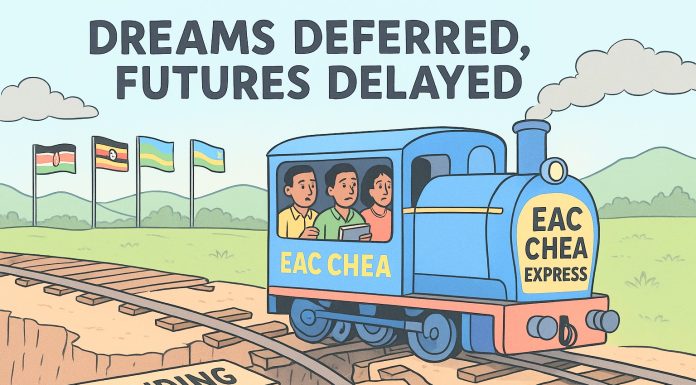
The initiative promised to harmonize university standards, enable seamless movement of students and academic staff, and ensure that degrees earned in one member state would be recognized across the region.
The most significant and far-reaching effort so far is the Regional Quality Assurance Project, which gained traction in universities across all member states and has become a continental success story.
Unless...