






























- Kenya’s education system cannot achieve excellence, accountability, and learner success without a robust quality assurance framework that goes beyond routine inspections to embrace comprehensive, evidence-based audits.
- Effective quality assurance is not merely an administrative exercise; it is a critical safeguard against corruption, inefficiency, poor governance, and declining educational standards in our schools.
- The future of basic education in Kenya depends on strengthening independent, well-resourced, technology-driven, and risk-based quality assurance systems that promote transparency, accountability, and continuous improvement.
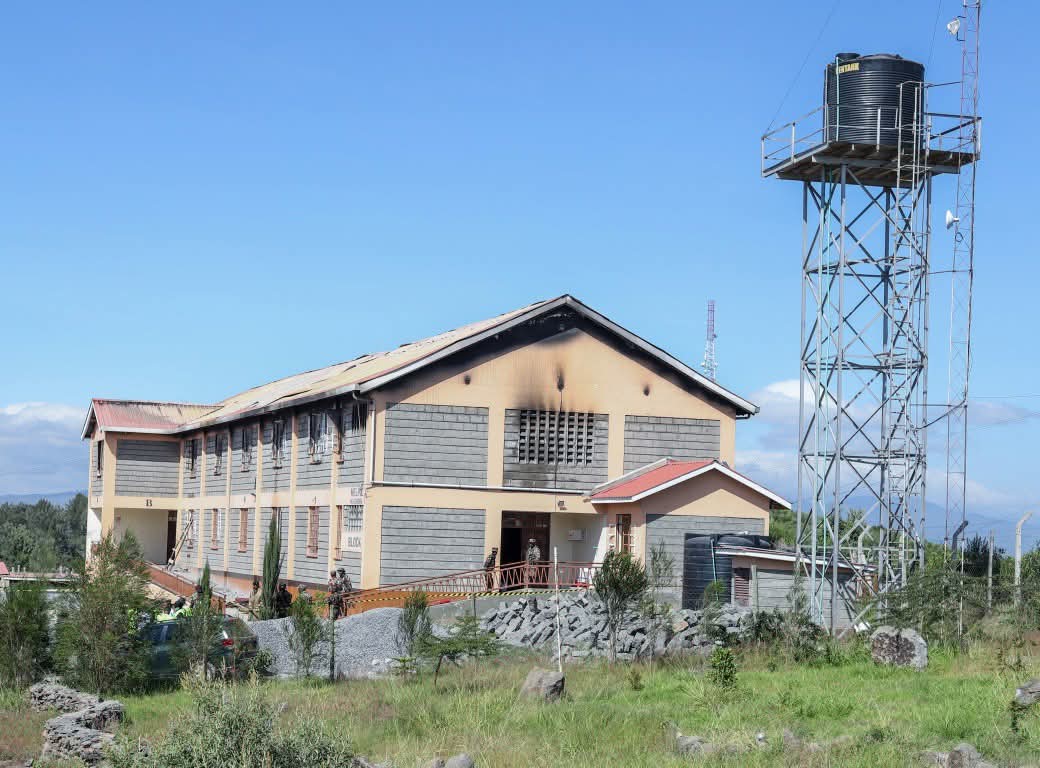
Whenever examination results decline, school unrest erupts (such as the increasing cases of students burning schools), or financial scandals emerge in public schools, attention often turns to principals, teachers, or Boards of Management. Yet one critical question is rarely asked: Where was the Quality Assurance system?
Kenya’s Basic Education Act (Cap 211) envisages a robust and independent quality assurance framework designed to safeguard educational standards, monitor curriculum implementation, protect learners, and ensure the prudent use of public resources. Unfortunately, what was intended to be a rigorous audit system has, in many cases, been reduced to occasional courtesy visits that barely scratch the surface of what happens inside schools.
The result has been predictable. Weak oversight has created opportunities for corruption, financial mismanagement, manipulation of records, and declining educational standards in many institutions across the country, the latest manifestation being the burning of schools by learners.
The time has come to restore Quality Assurance Audits to their rightful place as comprehensive and detailed evaluations of schools rather than brief inspections that often produce little meaningful change.
What the Law Intended
Part IX of the Basic Education Act (Cap 211), Sections 64–72, establishes a comprehensive framework for standards, quality assurance, and relevance in basic education. The law created the Education Standards and Quality Assurance Council and assigned it the responsibility of ensuring standards, supervising curriculum implementation, monitoring assessments, and evaluating the quality of education in all basic education institutions.
Section 65 provides for the appointment of Quality Assurance and Standards Officers, while Section 66 grants these officers extensive powers, including entering educational institutions with or without notice, examining records, reviewing teaching materials, inspecting management systems, and obtaining information necessary for quality reviews.
The Act further places responsibility on both the Cabinet Secretary and school promoters to maintain standards and requires continuous review of educational quality, relevance, and compliance with national and international benchmarks.
The language of the law is deliberate. It speaks of monitoring, evaluation, quality review, standards, and accountability. It does not envisage superficial visits that last a few hours before officers move on to the next institution, as is often the current practice.
In essence, Parliament intended Quality Assurance Officers to function as educational auditors.
From Comprehensive Audits to Routine Visits
Historically, school inspectors conducted detailed evaluations covering academic performance, financial management, infrastructure, governance, learner welfare, and teacher effectiveness. Today, however, many schools experience quality assurance mainly through scheduled visits that focus on checking lesson attendance, reviewing a few documents, and holding brief meetings with administrators.
Such visits often fail to examine the deeper issues affecting educational quality. For example, a school may possess all the required records neatly arranged in filing cabinets. However, a thorough audit might reveal inflated procurement costs, ghost projects, manipulated enrolment figures, unauthorized levies, poor utilization of capitation funds, or inadequate implementation of the Competency-Based Curriculum.
Unfortunately, these deeper investigations are increasingly rare. Many quality assurance departments remain understaffed, underfunded, and overstretched. One officer may be expected to supervise dozens or even hundreds of institutions spread across vast geographical areas. Under such circumstances, comprehensive audits become difficult, and superficial visits become the norm.
How Weak Audits Facilitate Corruption
Corruption flourishes wherever oversight is weak. When school managers know that audits are unlikely to be detailed, opportunities for malpractice increase.
The first area affected is financial management. Public schools receive substantial government capitation funds annually. Without rigorous auditing, procurement processes can be manipulated, suppliers favoured, and project costs inflated.
Infrastructure projects present another area of concern. In some institutions, buildings may be reported as complete while significant defects remain undisclosed. A brief visit may not reveal such irregularities, but a detailed audit involving document verification, physical inspection, and stakeholder interviews would likely expose them.
Learner enrolment data may also be manipulated to attract additional government funding. Since capitation allocations are linked to student numbers, inflating enrolment figures can create opportunities for financial gain.
Similarly, unauthorized levies imposed on parents often escape scrutiny when auditors focus primarily on academic matters and neglect financial records. Even curriculum implementation can suffer. Schools may produce lesson plans and schemes of work that appear compliant on paper while actual classroom practice falls far below expected standards.
Why Detailed Audits Matter
A genuine quality assurance audit should examine every aspect of a school’s operations.
It should evaluate governance structures, financial accountability, procurement systems, curriculum delivery, learner welfare, infrastructure adequacy, safety standards, teacher performance, assessment practices, and compliance with Ministry of Education policies.
Such audits should involve interviews with teachers, learners, parents, and Board of Management members. Financial records should be cross-checked against physical projects. Enrolment registers should be verified. Teaching and learning should be observed over extended periods rather than during carefully choreographed inspection days.
The purpose is not to punish schools but to identify weaknesses, promote continuous improvement, and protect public investment in education.
Cost of Weak Quality Assurance
The consequences of weak quality assurance extend far beyond financial losses. Learners become the ultimate victims. A school may report excellent compliance while lacking functional laboratories, adequate learning materials, or sufficient teaching staff. Students may complete their education without acquiring the competencies expected under the curriculum.
Parents lose confidence in public institutions. Taxpayers question the value of increased education funding. Honest school administrators become demoralized when institutions engaging in questionable practices face little scrutiny.
What Needs to Change
If Kenya is serious about improving educational standards and safeguarding public resources, reforming the quality assurance system can no longer be treated as an administrative afterthought. The challenge is not the absence of laws or policies; rather, it is the weak implementation of existing provisions under the Basic Education Act. Meaningful reform requires a fundamental shift from occasional school visits to comprehensive, evidence-based audits.
First, the independence of Quality Assurance and Standards Officers must be strengthened. Effective auditors cannot perform their duties if they are constantly exposed to pressure from politicians, influential school sponsors, local administrators, or senior education officials. Too often, adverse findings are watered down, delayed, or ignored because of external interference. Quality assurance officers should be insulated from political influence through clear legal protections and operational autonomy. Equally important is the establishment of independent reporting channels through which auditors can submit findings directly to higher authorities without fear of victimization, transfer, or intimidation. An auditor’s loyalty should be to educational standards and the law, not to powerful individuals seeking to protect vested interests.
Second, the quality assurance process must embrace digital technology. In an era where billions of shillings are invested annually in basic education, reliance on paper-based records and manual verification systems creates opportunities for manipulation. Digitalization would enable real-time monitoring of financial transactions, making it easier to detect irregular expenditures before they become entrenched. Electronic school records would reduce the possibility of falsified enrolment figures, altered attendance registers, and manipulated academic records.
Third, in the contemporary world, we must move away from traditional quality assurance to Risk-Based Quality Assurance (RBQA). This is an approach to quality assurance in which oversight, audits, inspections, and monitoring efforts are prioritized according to the level of risk posed by an institution, programme, or activity. Rather than applying the same level of scrutiny to every school, quality assurance officers should focus more resources on areas where the likelihood and consequences of failure, non-compliance, corruption, or poor performance are greatest.
Fourth, transparency must become a central pillar of educational governance. Audit findings should not remain hidden in ministry files where they are inaccessible to parents, communities, and taxpayers who finance public education. Subject to appropriate confidentiality safeguards, school audit reports should be published and made available to stakeholders. Open procurement systems, where contracts and supplier information are publicly disclosed, would significantly reduce opportunities for inflated tenders, conflicts of interest, and procurement fraud. Corruption thrives in secrecy; transparency remains one of its most effective antidotes.
Fifth, the government must invest in strengthening the capacity of the quality assurance system itself. Many officers are currently expected to oversee large numbers of institutions with limited personnel, inadequate transport, and insufficient operational resources. Under such circumstances, comprehensive audits become practically impossible. Recruiting additional quality assurance officers would allow for more frequent and detailed audits. Continuous professional development is equally important, ensuring that officers remain competent in modern auditing techniques, financial analysis, curriculum evaluation, and digital monitoring systems.
Finally, stronger sanctions must accompany stronger oversight. Audit findings lose their value when identified irregularities attract little or no consequence. Individuals found culpable of financial mismanagement, procurement fraud, or deliberate falsification of records should face swift investigation and prosecution. Misappropriated public funds should be recovered wherever possible, and those responsible should be held personally liable for losses incurred. School principals, Boards of Management, and other officials entrusted with public resources must understand that accountability is not collective and anonymous; it is personal and enforceable. When wrongdoing carries meaningful consequences, the incentive to engage in corrupt practices diminishes significantly.
My recommendation to the Ministry of Education, as a quality assurance expert, is that multi-agency teams comprising experts in finance, procurement, human resources, curriculum, and architecture should be deployed to schools to produce comprehensive and far-reaching actionable reports for the Cabinet Secretary.
Anything less is merely an inspection visit.
YOU MAY ALSO LIKE: Rethinking Quality Assurance in Kenyan Universities
The Author is a Professor of Chemistry, a former Vice-Chancellor, a Higher Education Expert, a Quality Assurance Consultant, and Trainer. Contact: okothmdo@uoeld.ac.ke