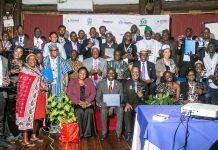












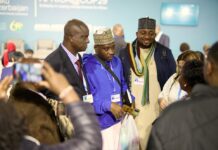













- The conference united over 60 onsite delegates and countless virtual participants from across the world: scholars, policymakers, entrepreneurs and innovators who came not to theorize, but to co-create grounded solutions across eight powerful sub-themes illuminating Africa’s most urgent, yet often neglected, pathways to transformation.
- On the final day, the conference climaxed with the SMEGAfrica Excellence Awards, celebrating 22 changemakers across academia, innovation, agribusiness, gender equality, health, and civic engagement.
- The Inaugural Scholar Media Africa Conference was more than an event—it was a declaration. It boldly stated that Africa’s time is now, and her youth are not just ready, they are already rising!
It’s time to break free from the outdated belief that leadership is the preserve of the old, the privileged, or the powerful. In today’s Africa, true leadership must be anchored in competence, integrity, and courage.
Dr. Purity Ngina, MBS, CEO, National Gender and Equality Commission (NGEC), Keynote Address at the SMEGAfrica Excellence Awards and Gala Dinner.
As dawn broke over Nairobi’s serene skyline on April 23, 2025, a historic gathering quietly unfolded at the prestigious Trademark Hotel. But this was no ordinary event. The Inaugural Scholar Media Africa Conference & SMEGAfrica Excellence Awards 2025 signaled more than a conference—it birthed a movement. For three transformative days (April 23-25, 2025), the hotel’s halls echoed with ideas, stories, and dreams of a continent reimagining itself through the eyes and energies of its youth.
With the theme “Youth Empowerment, Health, and Engagement Through Inclusion, Innovation, and Job Creation,” this groundbreaking event positioned Africa’s young people not as passive recipients of development, but as the architects of the future.
The conference brought together over 60 physical delegates and numerous virtual participants from across Kenya, Uganda, Tanzania, Burundi, Rwanda, South Sudan, South Africa, Nigeria, Zimbabwe, Mozambique, Ghana, DR Congo, Sierra Leone, Cameroon, Ethiopia, Tunisia, Libya, Australia, the United States, Canada, India, and other parts of the globe. Scholars, policymakers, entrepreneurs, civil society actors, and digital innovators came together, not to deliberate in abstraction, but to co-create solutions rooted in Africa’s soil, soul, and spirit.

Opening of the Conference – Sharing SMEGAfrica’s Background
While officially opening the conference, Elijah Nyaanga shared the humble beginnings and transformational journey of Scholar Media Group Africa (SMEGAfrica), which began as a social media initiative in 2014 before its formal incorporation as a media company in October 2017:
“Scholar Media Group Africa was born in 2014 as a simple but passionate social media platform—created to spark dialogue, share knowledge, and inspire transformation across the continent. In October 2017, it was incorporated as a full-fledged media company, and since then, we have grown into a respected force in media, research, youth empowerment, and thought leadership in Africa and beyond. This conference is a testament to that journey, and to the power of vision, resilience, and faith.”


Igniting a Pan-African Exchange of Vision and Voice
From the moment the keynote address rang through the auditorium, it was clear that this wasn’t about lofty rhetoric, it was about real change. The conference unfolded across eight high-impact sub-themes, each shedding light on urgent but often overlooked dimensions of Africa’s transformation journey.

1. Redefining Innovation: African Solutions for African Challenges
When Maganda Evans Tabingwa, Ugandan innovator and Founder of Tanya Innovations Africa, stepped onto the stage, he wasted no time in setting the tone:
“Africa must stop importing solutions. Our thinkers, doers, and dreamers have what it takes.”
His compelling session revealed how indigenous knowledge systems, rural-friendly technologies, and homegrown invention ecosystems could solve education, agriculture, and healthcare challenges that foreign blueprints often misdiagnose. From empowering inventors through local patent support to creating startup-friendly policy environments, his message was simple but profound: Africa already has the brains. It just needs to believe in them.
He called for tri-sector partnerships—between universities, industry, and government—to nurture sustainable innovation ecosystems. In his words, “We must build Made-in-Africa solutions by investing in Think-in-Africa minds.”


2. Well-being and Resilience: Centering Mental Health in Development
One of the most emotionally stirring sessions came from Dr. Magdaline Gesare Magangi, a respected lecturer at Egerton University and founder of Chit-chat with Dr. Meg. With poise and passion, she argued that:
“Youth mental health is not a luxury—it’s a national development agenda.”
Dr. Magangi illuminated the harsh realities faced by Africa’s young people, particularly the gendered nature of mental distress. She cited startling global data: suicide is now the fourth leading cause of death among youth aged 15–29. Women report higher rates of depression and anxiety, while men face greater risk of substance abuse and suicide.
She called for trauma-informed care in schools, increased investments in psychosocial support, and mental health literacy campaigns across campuses and communities. In a digital age riddled with cyberbullying and online addiction, her voice was a timely call to protect the minds shaping Africa’s tomorrow.


3. Rewriting the African Narrative: Media as a Catalyst for Youth Empowerment
Sierra Leone’s Alpha Amadu Jalloh, human rights advocate and author of Monopoly of Happiness, challenged delegates to imagine media as more than just information—it can be liberation. In his powerful session, he argued that: “We must fund media houses that prioritize truth, justice, and youth voices.”
Jalloh warned against the dangers of youth being seen only through a deficit lens—angry, unemployed, violent. Instead, he showcased how storytelling, community media, and digital activism can restore dignity, spark debate, and reclaim the narrative.
His plea was simple: invest in ethical, youth-driven media that affirms African identities and pushes for accountability.


4. Economic Inclusion and the AfCFTA Opportunity
Prof. Christopher Ngacho, the Registrar of Research, Extension, Innovation, and Resource Mobilization at Kisii University, led a compelling discussion on unlocking Africa’s economic potential through inclusive trade and investment.
He spotlighted the African Continental Free Trade Area (AfCFTA) as a game-changer, if youth and women are placed at its center.
“Africa’s future lies in our informal traders, fintech innovators, and young creatives,” he asserted.
He emphasized the role of financial literacy, data-driven policymaking, and accessible microloans in creating economies where innovation can thrive from the grassroots. Linking the AfCFTA to Agenda 2063 and the SDGs, Prof. Ngacho’s presentation was a roadmap for transforming economic theory into lived opportunity.


5. Education, Technology, and the Future of Learning
In a critical session on learning and the digital age, Prof. Caroline Omulando, the Deputy Vice Chancellor for Academic Affairs at the Open University of Kenya (OUK), speaking on behalf of the Vice Chancellor, delivered a forward-thinking message: “Education must evolve to meet the digital realities of Africa’s youth.”
She highlighted how platforms like AI, open-source tools, and distance learning models can democratize access to quality education—especially in remote and marginalized communities.
From curriculum reforms to accommodate 21st-century skills, to digital literacy campaigns targeting both learners and educators, Prof. Omulando emphasized that digital transformation in education is not optional—it is inevitable.


6. S.T.E.P. Up: Data-Driven Leadership for the 21st Century
Dr. Joe Perez, U.S.-based leadership expert and bestselling author, introduced his signature S.T.E.P. framework—Strategy, Technology, Empowerment, and People. Through real-life case studies and actionable insights, he made the case for using data as a tool not only for transparency, but for inclusive transformation.
He urged leaders to turn analytics into trust and ensure that leadership systems are designed to include marginalized voices, especially youth and women.
“Data is the new oil. But wisdom is the new gold,” he concluded.

7. Strategic Advisory: Making Partnerships Count
Elzeever Odhiambo, strategic advisor and founder of Elzeever & Company, delivered a sobering address that challenged conventional development frameworks and called for a shift in mindset:
“Africa’s development partnerships are failing because they’re built on paperwork, not purpose.”
Her remarks highlighted the widespread inefficiencies in dormant and non-performing Memoranda of Understanding (MoUs), underscored the rising importance of Environmental, Social, and Governance (ESG) metrics in African development, and emphasized the critical shift needed—transforming youth from passive beneficiaries into proactive builders.
Her message resonated deeply across sectors, serving as a strategic wake-up call for governments, institutions, and civil society to pursue authentic, accountable, and impact-driven collaborations.


8. Youth-Led Governance: From Symbolism to Substance
The crescendo of the Inaugural Scholar Media Africa Conference 2025 was marked by a powerful and emotional keynote address delivered during the SMEGAfrica Excellence Awards and Gala Dinner by Dr. Purity Ngina, MBS—a name that resonates deeply with perseverance, intellect, and transformational leadership.
As the last speaker and keynote guest of the conference, Dr. Ngina’s presence was not just symbolic, it was substantive. She is Kenya’s youngest PhD holder in Mathematics and currently serves as the Chief Executive Officer of the National Gender and Equality Commission (NGEC), a constitutional body mandated to promote gender equality and inclusion in all spheres of public and private life.
Taking the podium amid a standing ovation, Dr. Ngina recounted her awe-inspiring journey—from scoring 232 marks in the Kenya Certificate of Primary Education (KCPE) to becoming a national leader entrusted with safeguarding constitutional rights. Her story electrified the room and underscored the reality that Africa’s best and most capable leaders may still be in classrooms, dormitories, and youth programs today—waiting for a chance to be heard and to lead.

In her keynote, Dr. Ngina challenged outdated notions of leadership tied to age, privilege, or position, instead calling for a new paradigm where competence, integrity, and courage define who leads. She reminded delegates and awardees that youth must not only be invited to the policy table as tokens of representation but should be empowered to shape, influence, and implement national and continental agendas.
Dr. Ngina also emphasized the catalytic role of gender equity in driving sustainable development, reiterating that no society can progress when half its population is sidelined. In her role as CEO of NGEC, she is at the forefront of:
- Monitoring and evaluating compliance with gender and equality principles across public institutions.
- Advising the government on affirmative action and inclusive policies, particularly for youth, women, persons with disabilities, marginalized communities, and the elderly.
- Investigating violations of equality rights and recommending corrective action to state and non-state actors.
- Mainstreaming gender and inclusion in development planning, budgeting, and governance.
Her call to action was unmistakable: “We must move beyond symbolism. Youth are not waiting to be the leaders of tomorrow—they are already leading today. Let’s empower them with trust, tools, and platforms to do more.”

As the final keynote speaker of the conference, Dr. Ngina’s message crowned the three-day event with bold vision and unshakable hope. Her voice not only resonated with the youth in the room but also reignited a pan-African conversation on merit-based, values-driven, inclusive leadership. In that moment, she didn’t just speak as a national figure—she stood as a torchbearer of the very future the conference sought to build.


To the vibrant youth of Africa: You are not just the leaders of tomorrow—you are the changemakers of today. Embrace your potential with courage, innovate boldly, and never underestimate the power of your voice. Our continent’s future rests in your hands, and through education, resilience, and unity, you can break barriers, shatter ceilings, and ignite a revolution of progress and inclusion. Rise up and lead Africa to the greatness it deserves.
(Dr)Tabitha Mogonchi, Senior Principal, Kereri Girls High School, Kenya.


Honoring Champions: The SMEGAfrica Excellence Awards
On the final day, the conference climaxed with the SMEGAfrica Excellence Awards, celebrating 22 changemakers across academia, innovation, agribusiness, gender equality, health, and civic engagement.
These were not celebrities, but servants. Not influencers, but impact-makers.
The awards reinforced a message woven through the conference: excellence, integrity, and service are the new currencies of African leadership.


We are pleased to inform our readers and stakeholders that while the Inaugural Scholar Media Africa Conference 2025 is comprehensively covered in this feature, the SMEGAfrica Excellence Awards, a distinct and prestigious component of the event is presented in a separate, detailed story: Africa’s New Vanguard: Honoring the 2025 SMEGAfrica Excellence Award Winners
The SMEGAfrica Excellence Awards celebrate outstanding individuals, organizations, and innovations driving positive change across Africa in education, media, entrepreneurship, health, research, youth empowerment, and inclusive development. These awards recognize excellence, resilience, and impact — values at the core of Scholar Media Group Africa (SMEGAfrica).
For inquiries, media partnerships, or nominations for future editions, please contact us at: info@scholarmedia.africa
Closing of the Conference – Appreciation to Delegates and Partners
In his closing remarks, Mr. Nyaanga, fondly known as Ambassador Scholarman Snr, celebrated the conference’s success and expressed heartfelt appreciation to all stakeholders for their vital role in making the event impactful and memorable:
“This was more than a gathering—it was a declaration that Africa’s future will be shaped by informed voices, bold innovators, and empowered youth. I sincerely thank every delegate, partner, speaker, and supporter who made this inaugural conference and awards gala a monumental success. The momentum we’ve built here will echo across institutions, businesses, and communities throughout Africa.”


Among the organizations that partnered with Scholar Media Africa to make the conference a resounding success were Kisii University, Tanya Innovations Africa, Strategic Solutions & Development International Inc., the Open University of Kenya (OUK), Piccadilly Drycleaners, BloomBells Charity, Nawiri Atelier, Kereri Girls High School, Arise Circle Kenya, Chit-chat with Dr. Meg, A Million Hugs among others.
An Invitation to Walk With Us
Scholar Media Africa is now building bridges—across sectors, nations, and generations. From partnering with universities and startups to engaging with civil society and development partners, our vision is clear: A future where Africa’s greatest export is its empowered youth.

From Vision to Action
The Inaugural Scholar Media Africa Conference was more than an event—it was a declaration. It boldly stated that Africa’s time is now, and her youth are not just ready—they are already rising!
As we set our sights on the 2026 Scholar Media Africa Conference & SMEGAfrica Excellence Awards, we carry forward a powerful commitment: The answers Africa seeks lie within her borders, and her young people are not the problem—they are the solution. Together with our global partners, we will forge collaborations that empower Africa’s youth, harness innovation, and drive sustainable transformation across the continent and beyond.
So, join us. Partner with us. Walk with us.
Because the future is African—and the future is now.
YOU MAY ALSO READ: Scholar Media Africa: The Scribes of Africa’s Second Liberation
MORE PHOTOS