


























- Africa’s future will be shaped by the minds it nurtures today, the knowledge it preserves, and the bold ideas it dares to bring to the world.
- True intellectual greatness is not measured by age or titles, but by the courage to question, the discipline to learn, and the commitment to use knowledge for the greater good.
- The most enduring legacy we can build is one that empowers the next generation to think independently, challenge convention, and create solutions that transform society.
At an age when many students are still discovering the power of the written word, Israel Y.K. Lubogo is already using it to explore some of the questions that will shape Africa’s future: What makes leadership ethical? Who tells Africa’s history? How can indigenous languages survive? And how should the law evolve in a world increasingly transformed by artificial intelligence? A student at King’s College Budo in Uganda, Israel is building a body of work that reaches beyond the classroom, offering a glimpse into the possibilities that emerge when youthful curiosity meets a culture of scholarship.
“I believe that age should never be a barrier to contributing to knowledge. My ambition is to keep learning, ask meaningful questions and use writing to preserve our heritage, examine the challenges of our time and contribute to a future in which African ideas command a place in global conversations,” is the message that captures the intellectual ambition underpinning his journey.
His growing bibliography spans leadership, history, cultural identity, racial justice, law and technology. These interests are connected by a common thread: a desire to understand the forces that shape societies and how knowledge can help communities preserve their heritage, confront contemporary challenges and imagine better futures.
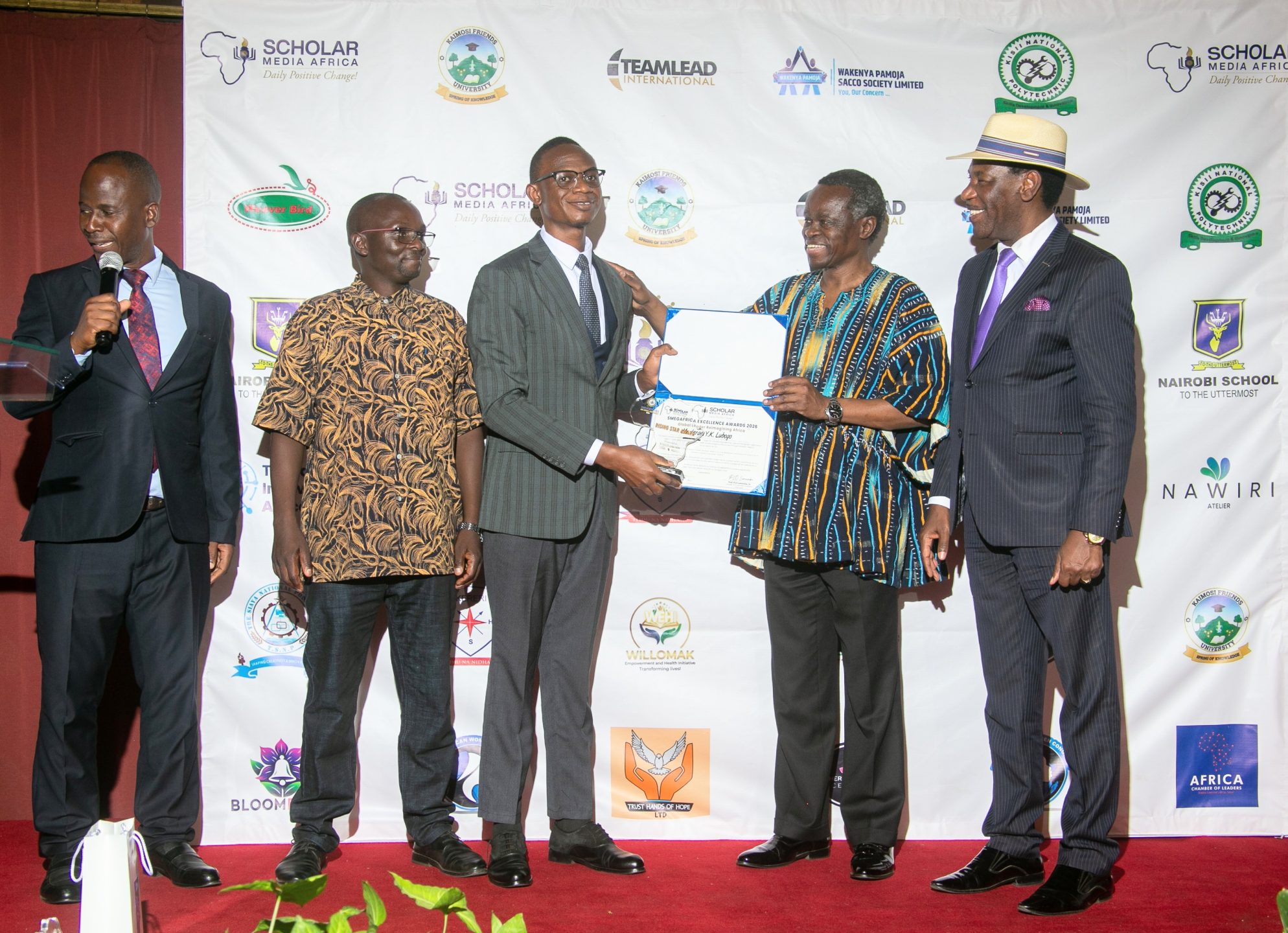
In August 2026, this journey received continental recognition when Israel was named the recipient of the Rising Star Award at the SMEGAfrica Excellence Awards 2026, organised by Scholar Media Group Africa (SMEGAFRICA) during the Second Annual International Scholar Media Africa Conference in Nairobi, Kenya.
The recognition celebrated his accomplishments as a young writer and his promise as an emerging contributor to African scholarship. Yet his story is bigger than an award. It is about the early formation of an intellectual, the influence of family and mentorship, and the responsibility that comes with turning ideas into meaningful contributions to society.
A Student with a Scholar’s Curiosity
Israel’s educational journey reflects both academic ability and a willingness to pursue opportunities beyond conventional expectations.
According to Ugandan media reporting, disruptions associated with the COVID-19 pandemic coincided with an accelerated academic progression. His performance enabled him to move from Primary Five at Budo Junior School to Primary Seven at Mwiri Primary School, where he sat his Primary Leaving Examinations and attained a Super First Grade. He subsequently continued his education at King’s College Budo.
Such milestones are important, but the more revealing dimension of his journey is what he has chosen to do alongside his education. He has ventured into authorship, participated in collaborative publishing projects and explored subjects that demand engagement with history, ethics, law and public policy.
His example challenges the assumption that meaningful intellectual contribution must wait until university graduation or professional establishment. Students can begin engaging with serious questions early, provided their curiosity is supported by reading, research, mentorship and constructive criticism.
The challenge, of course, is to ensure that early achievement becomes a foundation for deeper understanding. A promising young writer must continue developing the research skills, analytical discipline and intellectual independence that distinguish enduring scholarship from the mere accumulation of publications.
Israel’s journey is still unfolding, but it has already opened a conversation about the place of young people in Africa’s knowledge economy.
Leadership Begins with Service
One of Israel’s notable publications is Servant Leadership: Where Faith Lit the Way (2025), co-authored with Stephen Mutiibwa Kato, who was Head Prefect at King’s College Budo.
Published by Suigeneris Publishing House, the book explores leadership through humility, faith, discipline, responsibility and service. Its presence in Makerere University’s institutional repository provides a verifiable academic record of the work and identifies Israel as an innovative Senior Four student at the time.
The subject is particularly relevant in societies where leadership is frequently discussed in terms of authority, influence and status. Servant leadership offers a different perspective, asking whether the true measure of a leader lies in the responsibility they accept and the value they create for others.
For a student to engage with such questions through authorship is an opportunity to reflect on the relationship between personal ambition and public responsibility. It also demonstrates that leadership education need not be confined to classrooms, seminars or professional training programmes. It can begin with a book, a conversation and a willingness to examine the principles that guide human conduct.
The publication is an early contribution to a conversation that will remain relevant throughout Israel’s intellectual and professional development.
Preserving the Stories Africa Must Not Lose
Israel’s interests extend into African history and cultural preservation.
In The History of Busoga: Advanced Level (UACE) Edition (2025), he collaborated with Isaac Christopher Lubogo and Jireh Isaac Lubogo on a work intended for advanced-level students. The publication engages with the history of the Busoga Kingdom, connecting education with the preservation and transmission of historical knowledge.
For Africa, the question of who documents history and how that history is taught remains consequential. Communities possess rich traditions, institutions, experiences and systems of knowledge, but their continued visibility depends partly on whether these are carefully researched, documented and passed on to younger generations.
History is more than a record of the past. It helps communities understand their identities, interpret the present and make informed decisions about their future. By participating in a publication on Busoga history, Israel has entered a field where scholarship can serve both educational and cultural purposes.
His contribution to A Right to Protect Indigenous Languages: A Threat Against Extinction (2023) explores another aspect of this responsibility.
Languages carry collective memory, cultural expression, philosophy and knowledge accumulated across generations. When a language disappears, the loss may extend beyond words to the stories, traditions and distinctive ways of interpreting the world that it sustains.
The preservation of indigenous languages is therefore not simply a cultural exercise; it is part of protecting human dignity and ensuring that Africa’s diverse intellectual traditions remain available to future generations.
These publications point to a developing interest in how knowledge can preserve identity while helping young Africans engage confidently with the wider world.
From Racial Justice to the Future of Law
Israel’s intellectual interests are not limited to history and culture. They also encompass questions of justice, governance and technological change.
His contribution to Unveiling True Blackness: A Constant Fight Against Racial Discrimination and Neo-Colonialism Against the Black Man (2024) places him within wider debates about racial identity, equality and the continuing effects of colonial structures on African societies and the global Black community.
These are complex subjects that require careful research, historical awareness and the ability to engage critically with competing perspectives. Their inclusion in his writing portfolio suggests an interest in understanding the historical forces that continue to influence contemporary society.
His work connected with The Lawyer of the Future, including German, Spanish and Italian editions, turns towards the changing landscape of legal practice. Questions surrounding artificial intelligence, digital ethics, technological innovation and access to justice are becoming increasingly important as technology reshapes professional services and institutional decision-making.
His contribution to Exploring Uganda’s Tourism Law: A Definitive Guide to Regulations, Compliance and Sustainable Travel (2024) further reflects an interest in the relationship between legal frameworks, responsible development and public policy.
The range of these subjects is notable, but its real significance lies in the opportunities it creates for continued learning. Law, technology, history and public policy increasingly intersect, requiring future professionals to understand not only their specialist disciplines but also their wider social implications.
For Israel, the next stage will be to deepen this knowledge, strengthen his research methods and continue developing an independent voice.

A Father’s Legacy, a Son’s Intellectual Journey
Behind Israel’s literary journey is a family environment closely associated with scholarship, legal thought and publishing, particularly through his father, Prof. Isaac Christopher Lubogo.
A Ugandan legal scholar, author and founder of Suigeneris Consultancy and Suigeneris Publishers, Prof. Lubogo has built an extensive body of work in law, jurisprudence and legal education. His writing and professional activities engage with questions of legal theory, governance, human rights and the future of the legal profession.
Through his scholarship and publishing work, he represents a tradition of intellectual production in which ideas are researched, documented and made available for discussion. For a young person growing up around books and scholarly conversations, such an environment can provide valuable exposure to the discipline of writing and the process of translating ideas into published work.
But the deeper significance of a scholarly family legacy is not simply that a child follows a parent’s path. It is whether the next generation develops the confidence to ask new questions, examine inherited assumptions and eventually contribute ideas that stand on their own merits.
Reflecting on the importance of nurturing young minds, Prof. Isaac Christopher Lubogo, legal scholar, author and founder of Suigeneris Consultancy and Suigeneris Publishers, emphasises the enduring value of intellectual mentorship and independent thinking.
“The greatest legacy a parent can leave is not simply what they have written or achieved, but the curiosity, discipline and courage to think independently that they nurture in the next generation. A young person’s promise becomes meaningful when knowledge is pursued with humility and placed at the service of society,” Prof. Lubogo says.
His perspective highlights the importance of nurturing curiosity, independent thinking and a commitment to using knowledge for the greater good. While family mentorship can provide a strong foundation, Israel’s journey will ultimately be defined by his own dedication to learning, the originality of his ideas and his ability to make meaningful contributions to society.
Israel’s participation in collaborative works on leadership, indigenous languages and Busoga history illustrates how scholarship can cross generations. It also demonstrates the potential of mentorship to help young people encounter disciplines they might otherwise discover much later in life.
The ultimate measure of this relationship will be Israel’s ability to transform early exposure into a distinct intellectual contribution of his own.
Recognition in Nairobi, Responsibility Beyond the Award
The Rising Star Award brought Israel’s work to the attention of a wider African and international audience.
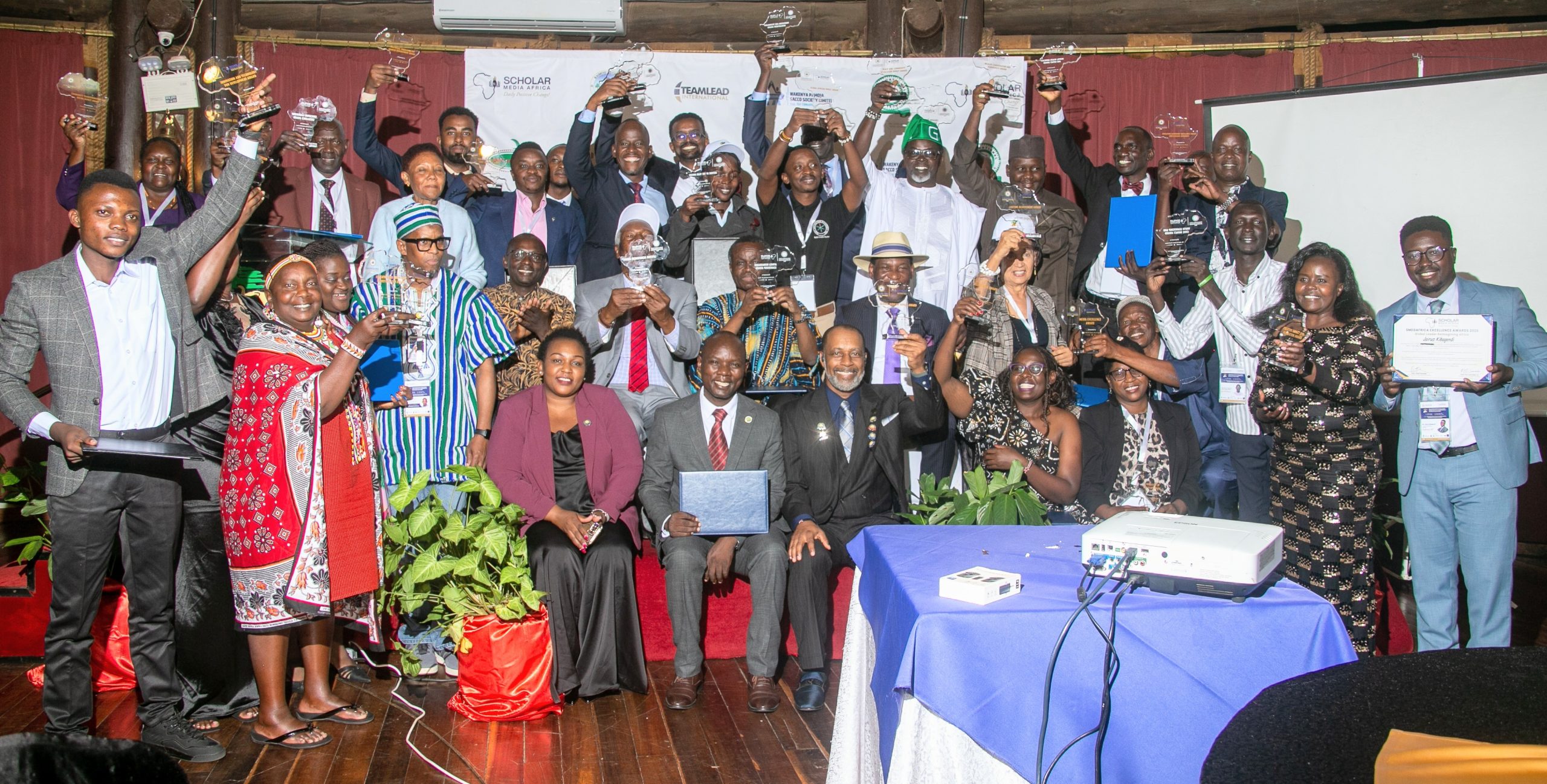
The Second Annual International Scholar Media Africa Conference and SMEGAfrica Excellence Awards 2026 took place from August 5 to 7, 2026, at Safari Park Hotel in Nairobi under the theme, “Reimagining Africa: Empowering Minds, Igniting Innovation, Driving Inclusive Growth.”
The gathering brought together participants from different countries and professional backgrounds to discuss Africa’s future through leadership, education, innovation and inclusive development. Israel’s recognition placed a young student and author within a conversation usually dominated by established professionals, academics, entrepreneurs and public leaders.
For Scholar Media Africa, recognising emerging intellectuals is part of a broader commitment to documenting African success stories, amplifying constructive ideas and encouraging knowledge that contributes to society.
However, awards are best understood as milestones rather than destinations. They can create visibility, open doors and encourage further engagement, but lasting intellectual credibility is built through accuracy, research, consistency and the ability to make ideas useful to others.
Israel’s future will depend on how he balances his education with his writing, strengthens his understanding of the subjects he explores and develops a body of work that can withstand critical examination.
The Rising Star Award is an important chapter. What follows will matter even more.
The Future Belongs to Those Who Build Knowledge
Africa’s future will be shaped not only by the institutions it builds, the technologies it adopts or the resources it mobilises, but also by the quality of the ideas its people develop and the knowledge they contribute to the world.
Israel Y.K. Lubogo’s journey offers an early illustration of what can happen when academic ambition extends beyond examinations into writing, research and intellectual engagement. From King’s College Budo to collaborative publications and recognition in Nairobi, he has begun participating in conversations about leadership, law, culture and the preservation of African knowledge.
His story is not evidence that the journey is complete. Rather, it is a reminder that intellectual development begins long before a person acquires professional titles or occupies positions of influence.
For parents, educators, publishers and institutions, his experience presents a broader challenge: young people need more than praise for their potential. They need books, mentorship, opportunities to publish, constructive criticism and environments where ideas can be tested and improved.
For Africa’s emerging writers, the responsibility is equally significant. The goal must be to move beyond producing publications towards building knowledge that is reliable, relevant and capable of enriching public understanding.

Israel’s journey is still being written. Its ultimate significance will not be determined by the number of books associated with his name or the distinctions he receives, but by the quality of his ideas, the integrity of his scholarship and the contribution he makes to society.
The Rising Star Award recognised a promising young intellectual. The greater opportunity now is to turn that promise into enduring work.
In a world where Africa continues to assert its place in global conversations, the continent needs young thinkers who can preserve its history, interrogate its present and help imagine its future. Israel Lubogo is beginning that journey, one book, one question and one idea at a time.
YOU MAY ALSO LIKE: Celebrating Changemakers: 50 Leaders and Institutions Honoured at SMEGAfrica Excellence Awards 2026
From Budo to the World Stage: How Israel Lubogo Represents the Rise of Africa’s Intellectual Youth