




























- KNATCOM serves as the official liaison between Kenya and United Nations Educational, Scientific and Cultural Organization (UNESCO), ensuring the country aligns its policies with global educational, scientific, and cultural initiatives.
- In the cultural sphere, KNATCOM has been instrumental in promoting and protecting Kenya’s cultural heritage, ensuring the preservation of UNESCO World Heritage Sites and intangible cultural assets. By bridging education, science, and culture, KNATCOM enhances Kenya’s development agenda and strengthens its global presence.
- With no pending bills, no audit issues and wage bill at the recommended level below 35%, KNATCOM is one of the best performing state corporations in Kenya.
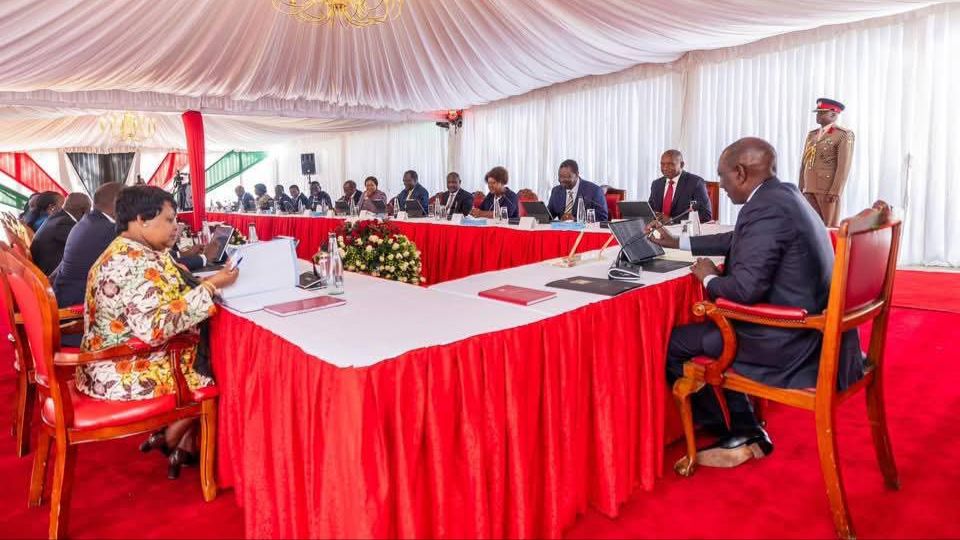
On January 21, 2025, President William Ruto led the first cabinet meeting of the year at State Lodge, Kakamega. During the meeting, he reaffirmed his administration’s commitment to reforms aimed at addressing financial inefficiencies, improving service delivery, and reducing dependence on the Exchequer.
According to the Cabinet News publication, the National Treasury reviewed 271 State Corporations and recommended, that some corporations were to be dissolved with their functions transferred to relevant ministries. Notably, the Kenya National Commission for UNESCO (KNATCOM) was among the 9 corporations to be transferred to a ministry, a move that may not be good for Kenya.
This article argues that KNATCOM, as a corporation, is so strategically important for Kenya’s global standing, unlike others in the list. Rather than dissolution, the government should strengthen KNATCOM through increased funding, better governance, and stakeholder engagement.
KNATCOM serves as the official liaison between Kenya and United Nations Educational, Scientific and Cultural Organization (UNESCO), ensuring the country aligns its policies with global educational, scientific, and cultural initiatives. This vital role facilitates Kenya’s participation in international forums, influences global decision-making, and adapts UNESCO’s policies to national priorities. Through this connection, KNATCOM keeps Kenya informed about emerging global trends, ensuring national policies remain relevant and effective.
Beyond policy alignment, KNATCOM actively supports the implementation of UNESCO programs in Kenya, including initiatives for quality education, teacher training, curriculum development, and inclusive learning. It has also contributed to the successful designation and management of World Heritage Sites and biosphere reserves, safeguarding Kenya’s natural and cultural heritage. Additionally, KNATCOM’s work in social and human sciences has strengthened research, ethics, and policy frameworks, further advancing national development.
KNATCOM plays a crucial role in advancing quality education in Kenya through UNESCO’s global frameworks and initiatives. As the focal point for UNESCO’s education programs, it promotes inclusive and equitable learning aligned with international best practices.
Through versatile initiatives, KNATCOM has integrated sustainability principles into Kenya’s education system, equipping learners with the skills to address modern challenges. The Commission also facilitates access to UNESCO scholarships and fellowships, offering Kenyan students and professionals, world-class academic and research opportunities, thus enhancing the country’s intellectual capital.
Beyond education, KNATCOM is key in enhancing scientific research, technological innovation, and environmental sustainability. It promotes collaboration between Kenyan researchers and international institutions, ensuring the country stays at the forefront of scientific advancements.
Through UNESCO’s Man and Biosphere (MAB) Program, KNATCOM has facilitated the establishment and management of biosphere reserves in Kenya, supporting sustainable conservation efforts. It also champions initiatives in climate change mitigation, water resource management, and biodiversity conservation, enhancing Kenya’s resilience to environmental challenges.
In the cultural sphere, KNATCOM has been instrumental in promoting and protecting Kenya’s cultural heritage, ensuring the preservation of UNESCO World Heritage Sites and intangible cultural assets. By bridging education, science, and culture, KNATCOM enhances Kenya’s development agenda and strengthens its global presence.
Retaining KNATCOM as a state corporation offers key economic benefits, particularly its ability to attract international partnerships and funding through UNESCO. As a legally recognized entity, KNATCOM can directly access UNESCO’s funding programs, securing grants, technical assistance, and capacity-building opportunities for Kenya. Since its transformation in 2013, KNATCOM has mobilized resources effectively, aligning its activities with UNESCO’s, thus enhancing financial and technical support for Kenya’s education, research, and cultural programs.
KNATCOM also enhances Kenya’s global reputation. As the host country for the UNESCO Regional Office for Eastern Africa, Kenya plays a pivotal role in shaping regional policies and initiatives.
Since its transformation into a state corporation, the KNATCOM has made significant strides in enhancing its operational efficiency and effectiveness. One of its key accomplishments is the establishment of twelve UNESCO Chairs across both public and private universities in Kenya.
These Chairs serve as centers for research, innovation, and policy development in alignment with UNESCO’s global priorities, bolstering Kenya’s academic and scientific contributions on the international stage. Additionally, KNATCOM has established multi-sectoral expert committees, including the Man and Biosphere Reserves and Bio-Ethics Committees, as well as five other committees that aid in implementing UNESCO’s initiatives within Kenya’s national development framework.
KNATCOM has also been instrumental in preserving Kenya’s cultural and natural heritage. Several sites have been inscribed as World Heritage Sites and Biosphere Reserves, safeguarding Kenya’s biodiversity and historical landmarks. One of the standout achievements is the facilitation of BaringoGeopark, Kenya’s first Geopark, which is set to enhance geological research and eco-tourism, positioning the country as a key player in global geological exploration.
In education, KNATCOM has played a pivotal role by promoting global citizenship and sustainability. The Commission mainstreamed Education for Sustainable Development (ESD), Global Citizenship Education (GCED), and General History of Africa (GHA) into the Competency-Based Curriculum (CBC), ensuring that Kenyan learners acquire skills in line with UNESCO’s sustainable future goals. Further, KNATCOM has been instrumental in promoting UNESCO Clubs and Associated Schools (ASPNet) across Kenyan educational institutions, promoting peace, non-violence, and sustainable development.
KNATCOM has significantly raised Kenya’s global profile by successfully lobbying for the country to host major UNESCO conferences, such as the Pan-African Conference for Education (2018), the 5th Interregional Meeting of UNESCO National Commissions (2018), and the AI Nairobi Conference in 2024. These events have contributed to policy development, economic growth, and cultural exchanges. The Commission has also endorsed Kenyan individuals and organizations for UNESCO scholarships and prizes, further enhancing opportunities for academic excellence and research.
These achievements highlight the importance of retaining KNATCOM as a state corporation to sustain Kenya’s global engagement in education, science, and culture.
Dissolving KNATCOM and reverting it to a department within the Ministry of Education would severely limit Kenya’s ability to engage directly with UNESCO and access global opportunities. As a state corporation, KNATCOM has the legal autonomy to liaise directly with UNESCO, securing grants, scholarships, and technical assistance that benefit key sectors. Losing this autonomy would result in bureaucratic delays and reduce Kenya’s capacity to respond promptly to UNESCO’s calls for proposals, funding, and policy initiatives, thus hindering the country’s national development.
Also, the dissolution of KNATCOM would disrupt ongoing projects and result in the loss of institutional expertise built over the years. Since becoming a state corporation in 2013, KNATCOM has recruited highly qualified professionals to manage its core program areas, including education, sciences, culture, and communication. These experts have been essential in implementing UNESCO programs, supporting research, and ensuring compliance with international standards. Reverting to a government department could lead to staff reassignment, loss of expertise, and weakened coordination of key projects.
Furthermore, dismantling KNATCOM’s autonomy would diminish Kenya’s influence in global and regional policy discussions. As a key representative in UNESCO’s Intergovernmental Committees, KNATCOM has shaped decisions that align with Kenya’s interests. Retaining KNATCOM as a state corporation is essential for sustaining Kenya’s leadership role and maximizing the benefits of its UNESCO membership.
Retaining KNATCOM as a state corporation presents an opportunity to strengthen the institution and reinforce Kenya’s global standing in UNESCO.
KNATCOM is vital in advancing Kenya’s goals nationally and internationally. As a state corporation, it enhances operational efficiency, strengthens global visibility, and ensures Kenya fulfills its UNESCO commitments. Dissolving KNATCOM or reverting it to a government department would undermine these achievements, weaken multi-sectoral engagement, and limit access to UNESCO opportunities. Policymakers must safeguard its autonomy by reinforcing governance, increasing financial support, and strengthening stakeholder collaboration.
YOU MAY ALSO READ: Why Functional Grant Management Offices are Critical for Kenyan Universities, Academic Future
With no pending bills, no audit issues and wage bill at the recommended level below 35%, KNATCOM is one of the best performing state corporations in Kenya.